Easy to recognise, enthralling to watch and downright astonishing once you know a bit about their lifecycle! Conservation Officer, Mariko Whyte takes a closer look at oil beetles, some of the most intriguing of our native insects.
Of our eight native oil beetle species, three are now extinct and three are very rare. All are under threat and have suffered dramatic declines due to changes in how we manage the countryside, as their fate is intertwined with some of our most important native pollinators.
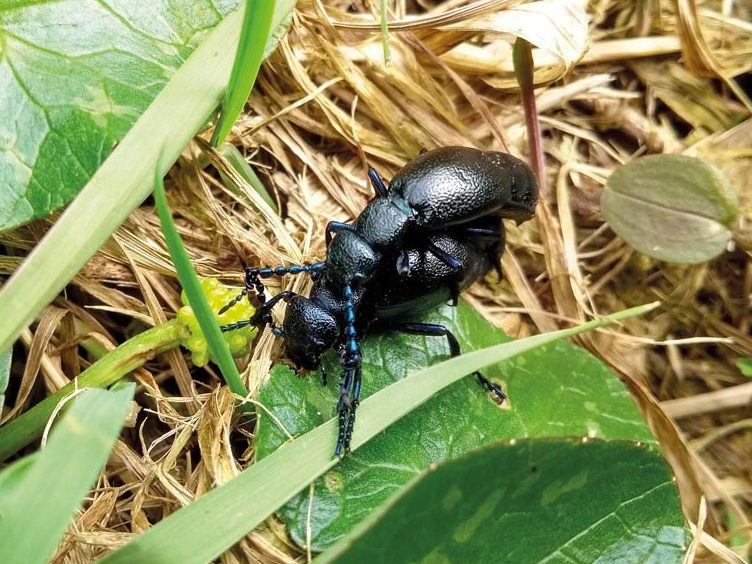
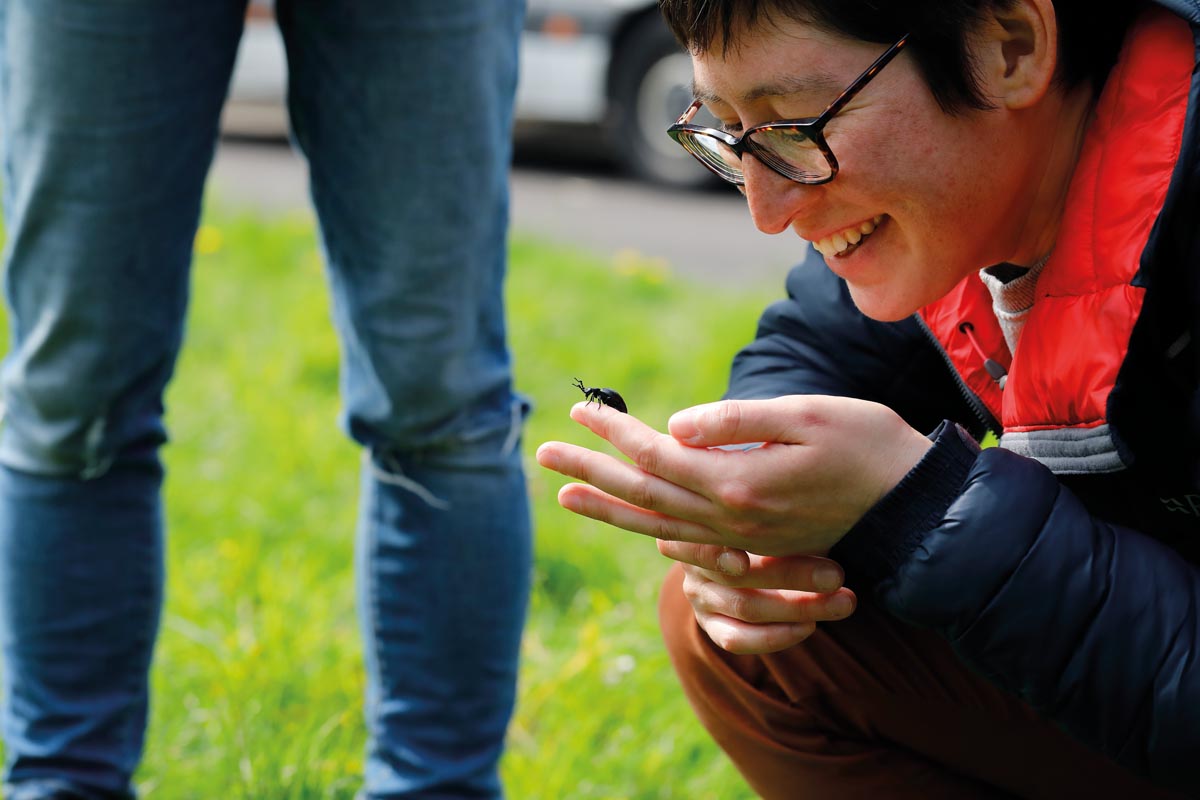
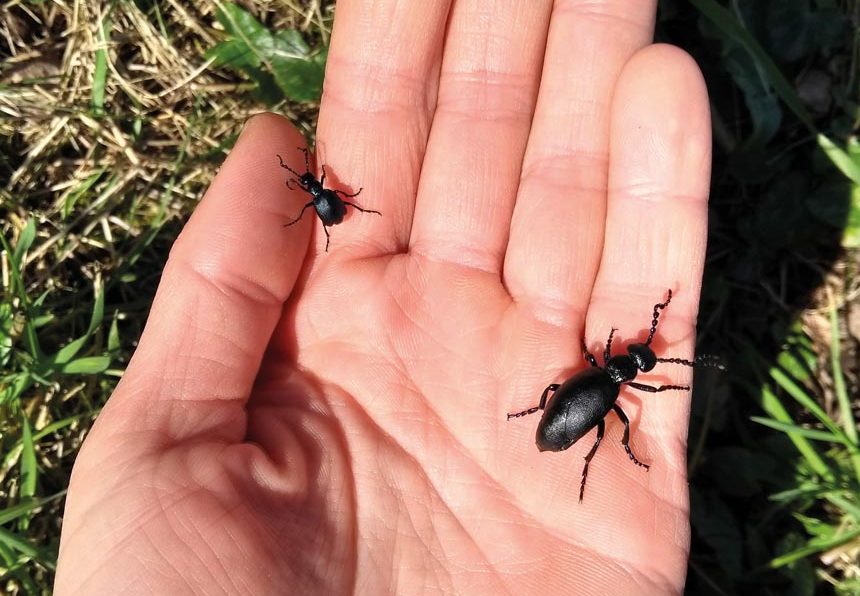
The most common species, the violet oil beetle (Meloe violaceus) and the black oil beetle (Meloe proscarabaeus) are widespread throughout Britain. Found across Dorset and up to 30mm in length, both species are black, often with a bluish metallic shine so despite the names, they are not easy to tell apart. Unusually among beetles they are flightless, having reduced wing cases, a sausage-like segmented body and long antennae. The ‘oil’ in their name refers to a noxious orange fluid exuded from their joints if they are threatened, making them distasteful to predators.
Their way of life is just as odd as their appearance, inextricably linked with some species of solitary mining bees. They share the same flower-rich habitats as the bee species they are associated with; black oil beetles are found mainly in grasslands while violet oil beetles are more frequent in woodland.
Adults emerge from the ground in spring and can be spotted bumbling around on sunny days between February and May, grazing on vegetation and searching for a mate. Males have modified segments in their antennae which are used in courtship to clasp and stroke the female’s antennae to get her in the mood.
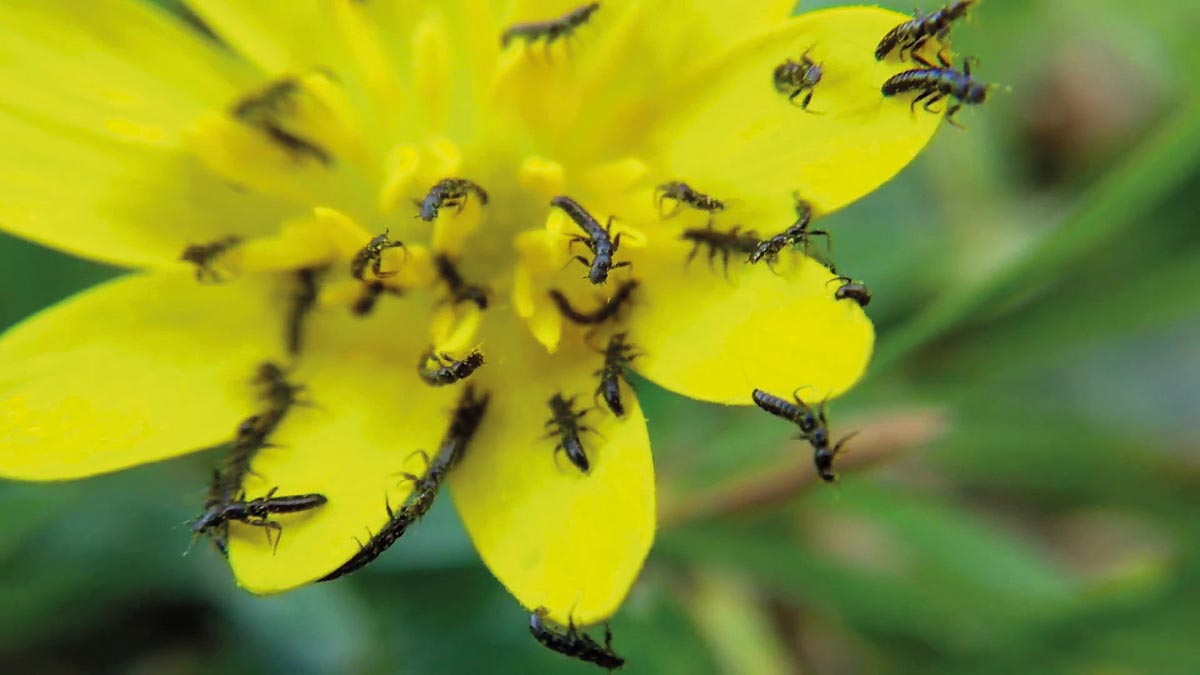
The female lays batches of about 1,000 eggs in shallow burrows dug in loose, warm soil, laying an astonishing 40,000 eggs in her two-month lifespan. For black oil beetles, the eggs hatch into active earwig-like larvae within a few weeks, with thousands of 2mm orange triungulins scrabbling to reach the top of nearby flowers. Here they scurry with frenetic energy and wait for passing insects to grasp onto. Violet oil beetle triungulins are black and don’t emerge from the ground for a whole year after eggs are laid, so are active earlier in the spring, overlapping with the adult generation.
The oil beetle larvae are effectively parasites of mining bees, aiming to hitch a lift to the bee’s nest. Once inside, the triungulins feed on the egg and pollen stores of their host and quickly moult to more typical grub-like larvae, eventually pupating and overwintering as adults underground before emerging as a new generation in the spring.
These beetles are great indicators of healthy habitats and can be found in number where they occur. If you do spot any, report the sighting to the Dorset Environmental Records Centre to contribute to our knowledge of where they are found in Dorset.
Explore
The Beauty of Weeds
Rewilding the Skies over Wild Woodbury
For the Love of Wildlife
Hogchester and the Harvester
Species of the Month
News
Our Community
Young Conservationists
Taking Action for Dorset’s Rivers and Wetlands
A Haven for Wildlife at Sculpture by The Lakes
Learn the Wild Way at Kingcombe
The Fascinating Lives of Oil Beetles
Celebrate and Commemorate
Powerstock Common Wildlife Walk
Book Recommendation
Taking a Closer Look at Micro-moths
Remembering Someone Special with a Gift for Wildlife