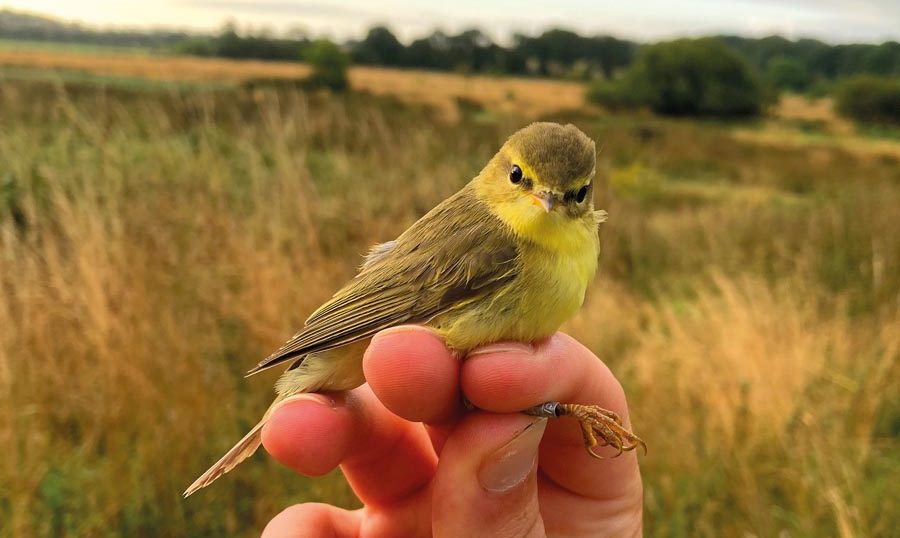
Wilder Dorset Ranger, Seb Elwood tells us how bird ringing is being used at Wild Woodbury to gain valuable information about species diversity and abundance, migration patterns and breeding success of species on the site.
The British Trust for Ornithology (BTO) bird ringing scheme was established over 100 years ago to study bird movements and to find out where birds that visit the UK in the summer months go during the winter, and where over-wintering species go to breed in the summer. There were legends that swallows spent the winter at the bottom of ponds or that goldcrest hitched a lift off the back of woodcock to migrate, and although we now know these myths not to be true, there are still species we know little about. This makes information about bird movements gained through bird ringing vital to our understanding of migration. The data we gather about population numbers, breeding success, and species phenology enables us to identify population declines and implement appropriate conservation measures.
Several methods are used to safely capture, ring and release birds, including lamping, cannon netting, and nest box monitoring, but the most widely used is mist netting. Made of a fine mesh, mist nets come in various heights and lengths and can be erected in specific locations to catch birds. When a bird flies into the net, it falls into a mesh pocket and is extracted by a qualified bird ringer. A small, lightweight metal ring is then placed on one of the bird’s legs, bearing a unique number. By studying different feather tracts, we are also able to record the age, sex, wing-length, and weight of the bird onto the BTO database. If caught on a subsequent ringing session, by ourselves or elsewhere, we can use the database to find out about the bird’s life history since being ringed, thanks to the unique leg ring code.
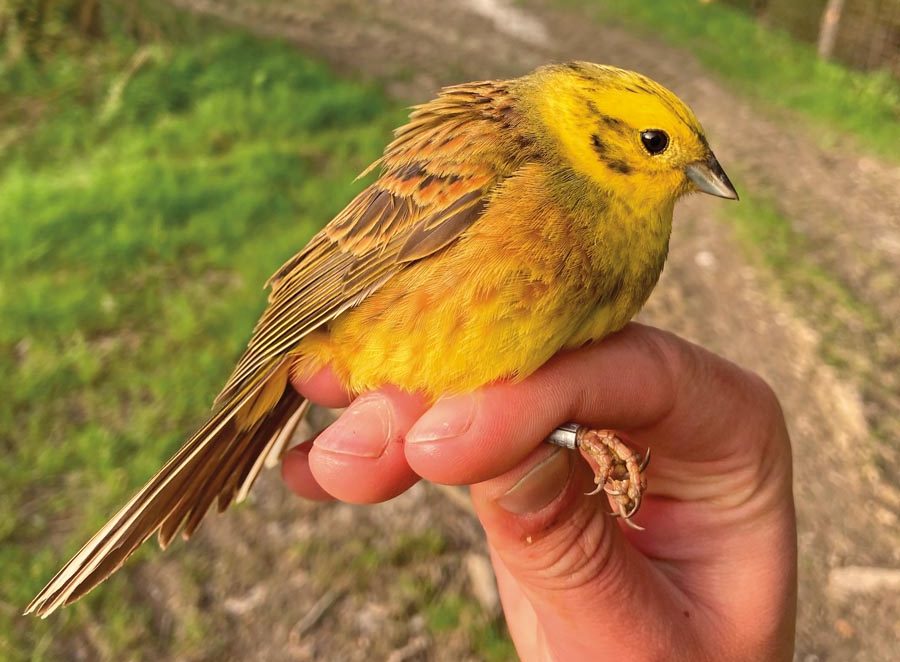
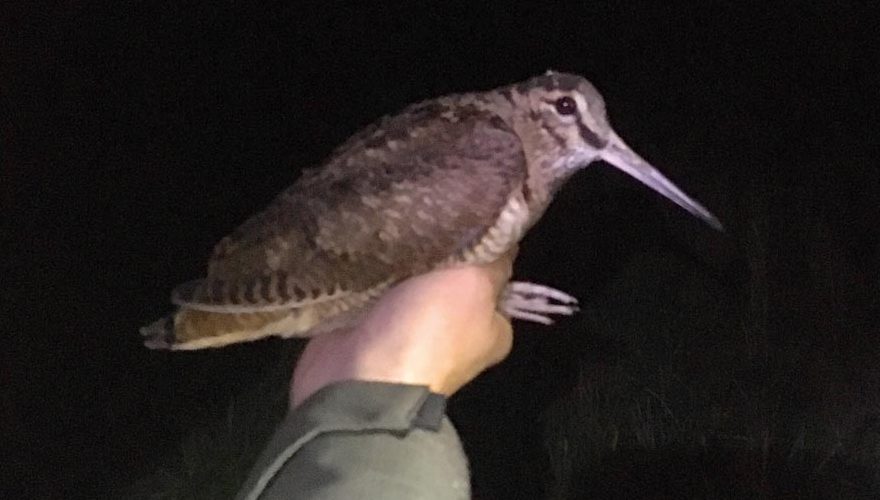
At Wild Woodbury, we have been monitoring the diversity and abundance of birds on site since Dorset Wildlife Trust purchased the land in 2021. Since then, volunteers and staff have walked a weekly transect across several fields to identify and count the species present. In spring 2022, I began bird ringing on site with the Stour Ringing Group to further our understanding of species on the site. We carried out several mist netting sessions in 2022 and caught around 400 birds throughout the year, including 90 yellowhammer, which had massively increased in number across the site during the first year of rewilding. Coupled with our night-time ringing efforts to target species such as woodcock, snipe, and jack snipe, it was a very positive first year.
By spring 2023, I had passed my ‘C’ permit assessment, allowing me to ring unaccompanied, thus increasing the opportunity for more ringing at Wild Woodbury. The arrival of our spring migrants, including several species of warbler such as chiffchaff, whitethroat, and blackcap, provided a wonderful opportunity for ringing as lots of birds were moving through the site, feeding on seed, and looking to set up a territory to breed. We were able to catch several birds and confirm that some were using the site to breed that year. One of the most encouraging breeders was the garden warbler, a scarce breeding species in south Dorset.
We don’t ring birds from end of May to mid-July, allowing breeding birds undisturbed nesting. However, autumn’s migration offers prime bird ringing as they use the site to feed up before their long journeys back. This lets us record species that usually pass unnoticed.
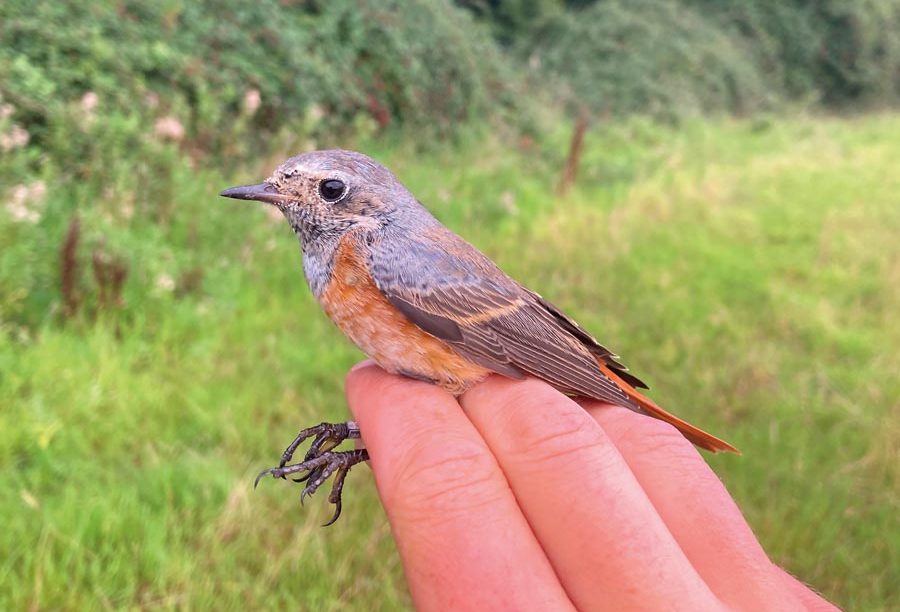
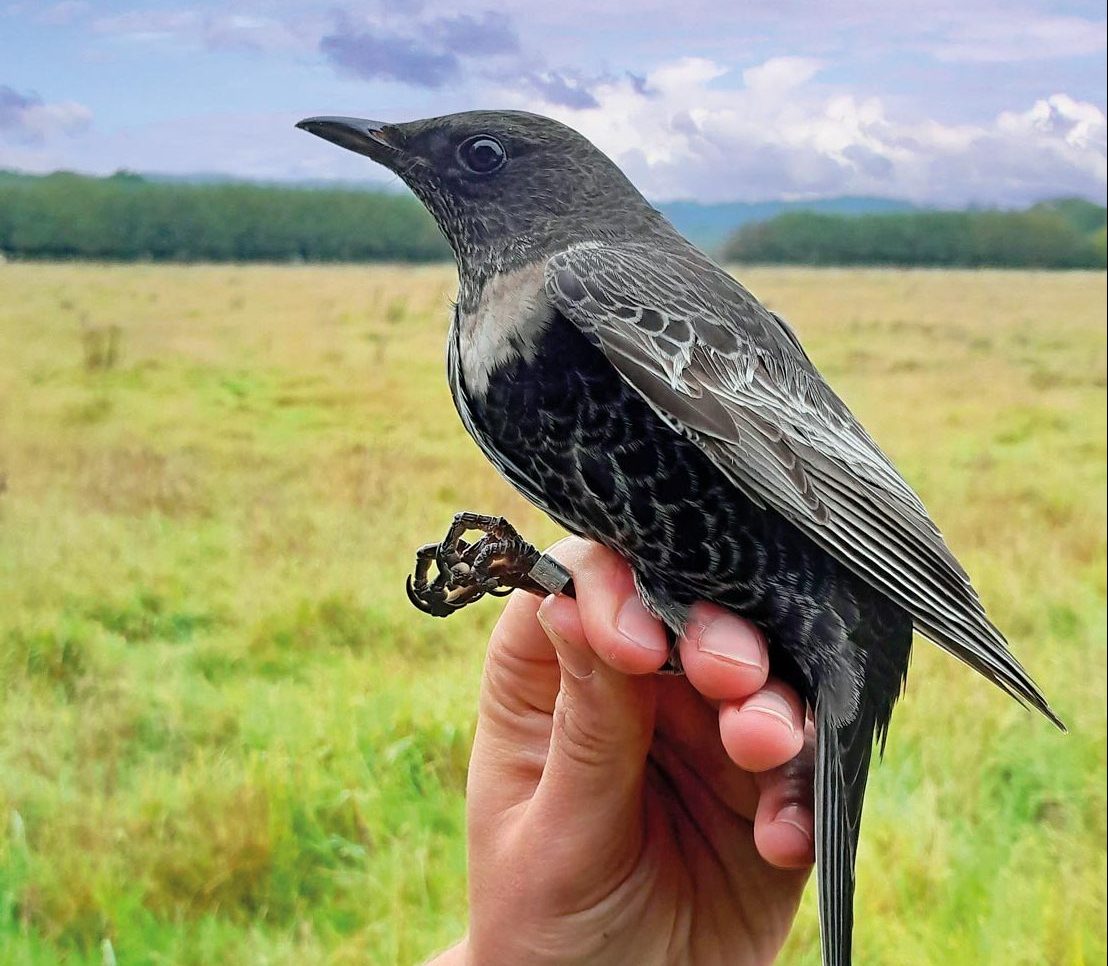
Last autumn, there were several highlights including ring ouzel, nightjar, pied flycatcher, redstart, grasshopper warbler and nightingale. The latter has one of the most famous birdsongs in the country, and is a species classically associated with established scrubland. I can only hope some of these birds use the site to breed in the coming years.
By November 2023, we had ringed around 1,000 birds at Wild Woodbury, across 49 different species. Many of them were new species recorded for the site, bringing our overall species list total to 116. Out of these, 28 are red listed on the birds of conservation concern list and are either using the site to breed or stay over winter. As vegetation on the site continues to become more structurally complex and more habitats and natural food sources are created, I cannot wait to see what turns up in a mist net next!
Explore
News
Our Community
Young Conservationists
Species of the Month
Hogchester and the Harvester
The Beauty of Weeds
Rewilding the Skies over Wild Woodbury
Taking Action for Dorset’s Rivers and Wetlands
A Haven for Wildlife at Sculpture by The Lakes
Learn the Wild Way at Kingcombe
For the Love of Wildlife
Powerstock Common Wildlife Walk
Taking a Closer Look at Micro-moths
Celebrate and Commemorate
Remembering Someone Special with a Gift for Wildlife