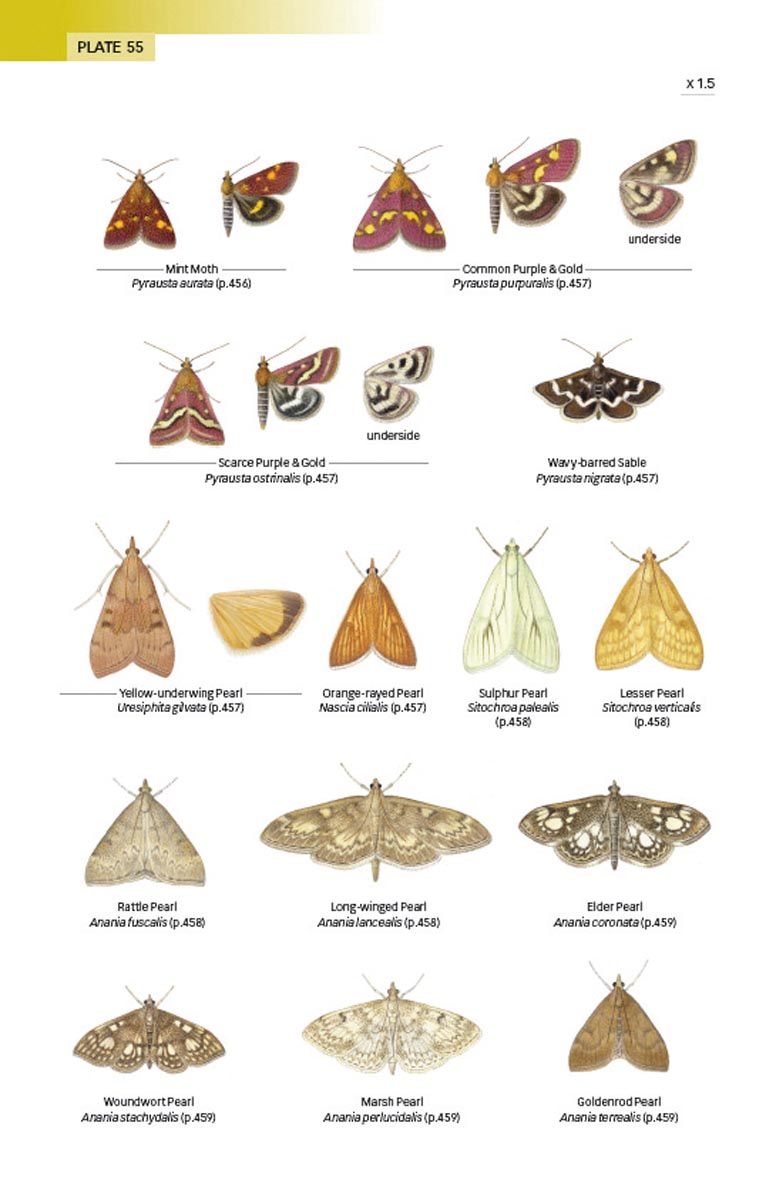
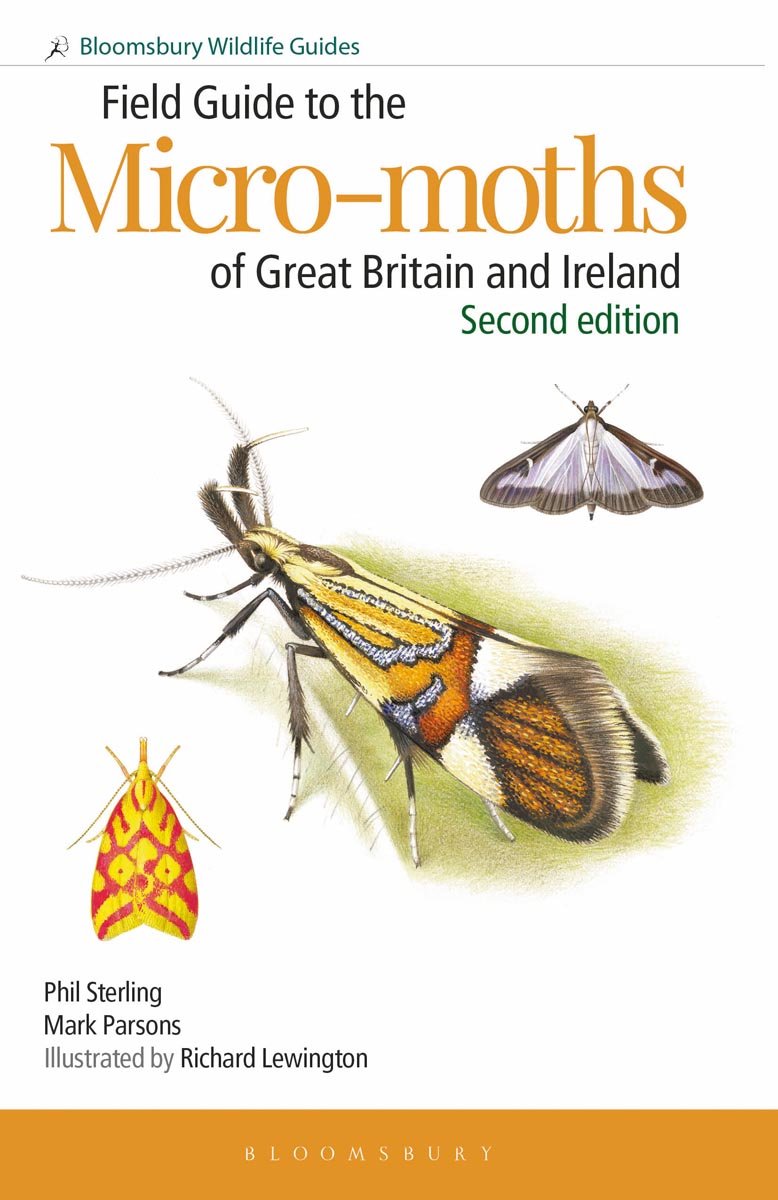
Since the publication of the first edition of the Field Guide to Micro-Moths in 2012, interest in moth recording has grown and there has been rapid change in insect fauna. Local authors Phil Sterling and Mark Parsons felt it was high time to launch the second edition.
The fully revised and expanded second edition of the ground-breaking book includes three stand-out changes for recorders. Firstly, we have added over 100 pages and 300 species; the field guide now details 1,286 species representing over 80% of native, naturalised or immigrant species recorded in Great Britain and Ireland.
Secondly, we have included a full set of English common names alongside the scientific names. We have made changes to existing names where we felt it to be appropriate. For example, species that specialise on fungi are no longer referred to as ‘clothes moths,’ an issue which understandably irritated recorders for decades. We hope our inclusion of them in a popular field guide will make micros accessible to yet more people by removing the perception that they somehow require more specialist scientific knowledge to study and enjoy. Many recorders now use social media to communicate their finds, and it is much easier to use common names.
Lastly, there are lots more photographs, particularly of leaf-mines, larval cases, and galls, to allow recorders to identify many species with confidence. Records of micro-moths are already collated by the National Moth Recording Scheme run by Butterfly Conservation, and we hope the field guide will stimulate even more recording, so that national distribution maps for micros can be produced alongside the superb ones we have for macros.
Field Guide to Micro-Moths
Available at all good bookshops or visit www.nhbs.com/field-guide-to-the-micro-moths-of-great-britain-and-ireland-second-edition-book to purchase the 2nd edition of the Field Guide to Micro-Moths.
Explore
Rewilding the Skies over Wild Woodbury
Hogchester and the Harvester
News
Learn the Wild Way at Kingcombe
Young Conservationists
Species of the Month
The Beauty of Weeds
Taking Action for Dorset’s Rivers and Wetlands
Our Community
A Haven for Wildlife at Sculpture by The Lakes
For the Love of Wildlife
Powerstock Common Wildlife Walk
Taking a Closer Look at Micro-moths
Celebrate and Commemorate
Remembering Someone Special with a Gift for Wildlife