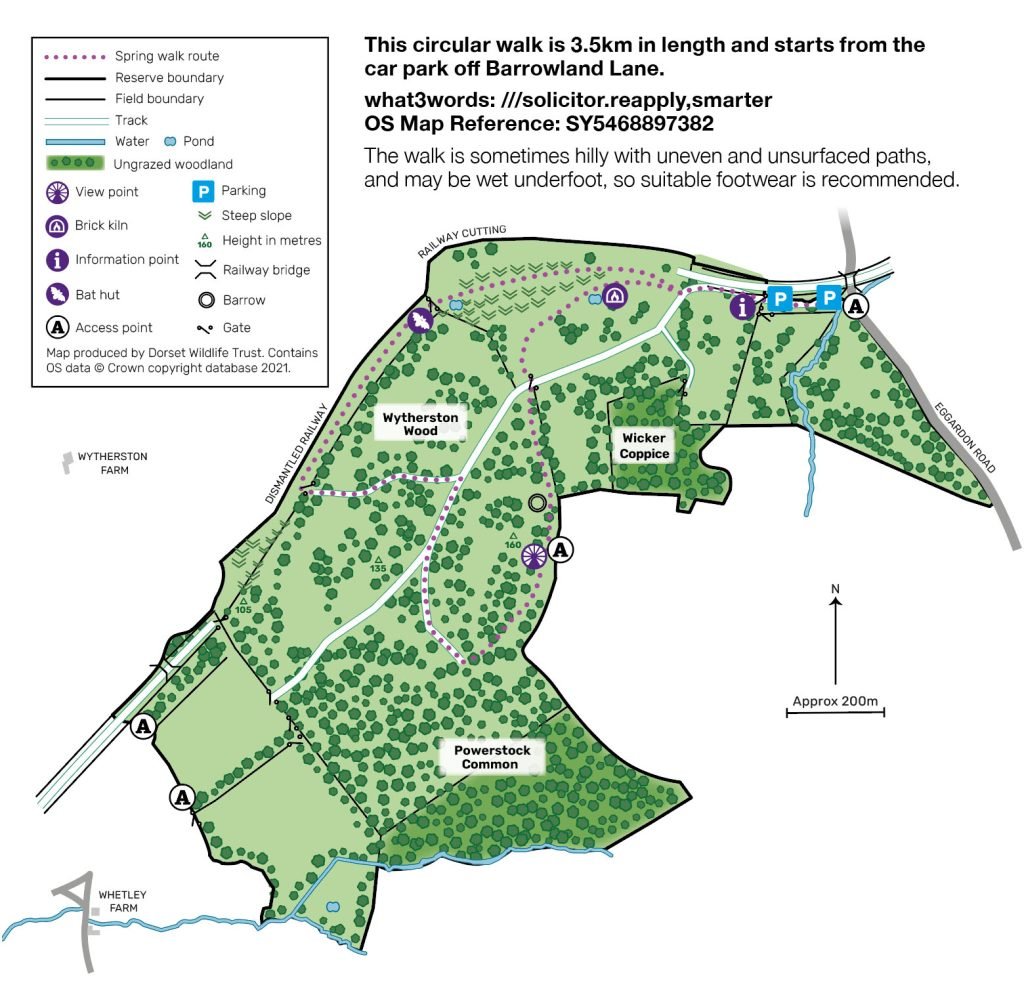
Reserves Manager, Neil Gibson takes you on a wild and inspiring tour of ancient woodland, grasslands, ponds, panoramic views, and man-made historic sites.
Once part of the ancient common of Poorwood, and lying within King John’s Royal Forest from 1208, Powerstock Common is now part of the recently designated Kingcombe National Nature Reserve. A rare mix of natural and man-made habitats makes for an exceptional array of species. In spring, the chorus of birdsong is heard throughout the reserve with the arrival of the migrant warblers such as willow warbler, chiffchaff, and blackcap. Late spring avian arrivals include tree pipit and spotted flycatcher. Early season butterflies to be encountered include brimstone, speckled wood, and orange tip, and later on in the season, common blue, small copper and green hairstreak can often be seen.
The walk
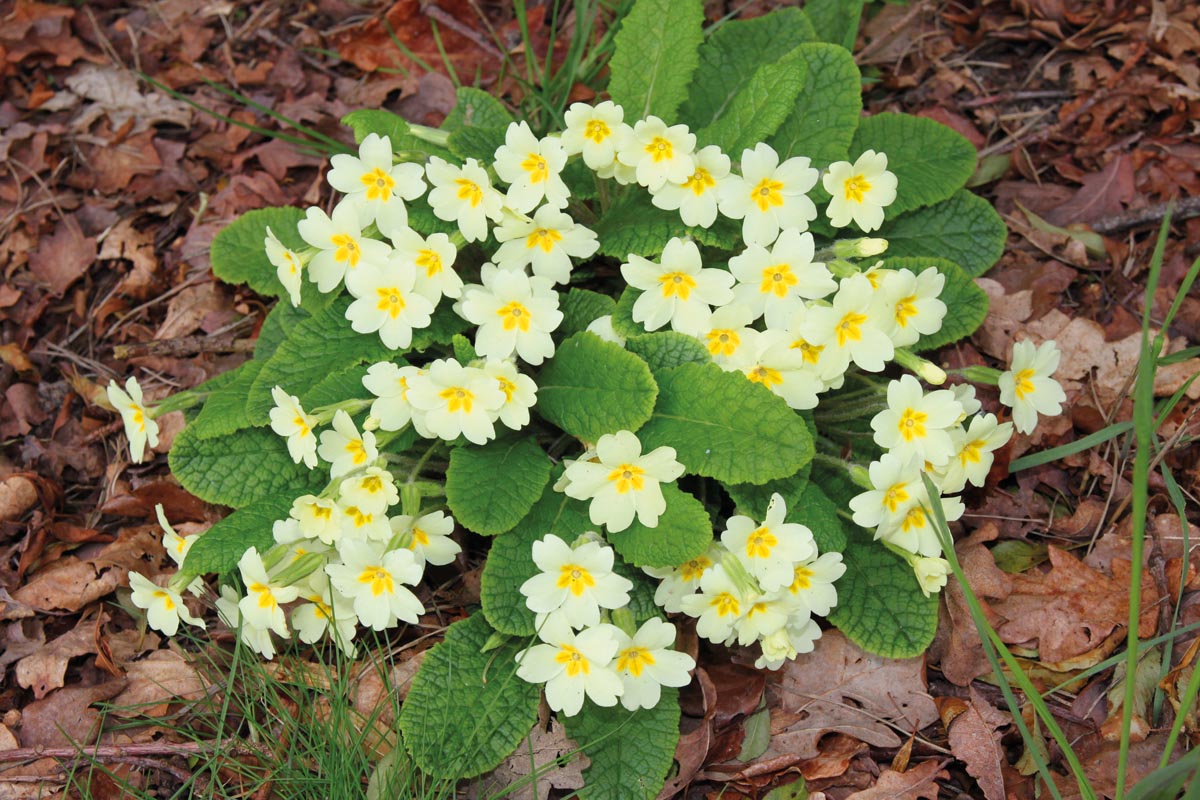
Start the walk from the car park at the information board. Follow the forestry track through the pedestrian gate and turn right after 250m, where the track forks. Early spring primroses and lesser celandines line the route. After 30m, take a left turn, just before the railway cutting, to follow the public bridleway.
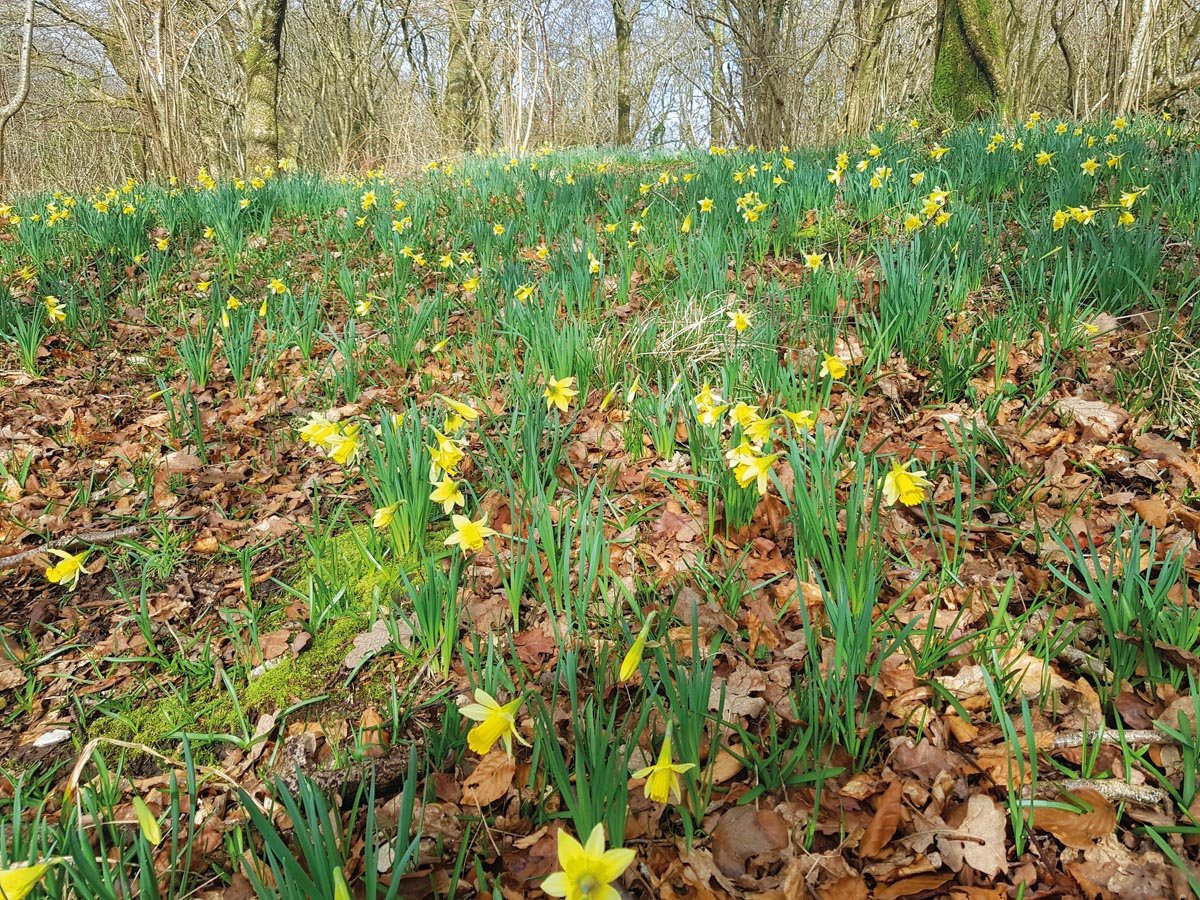
The bridleway passes the old 19th century brick kiln on your left, through scrubby woodland and out into another grassland area – look out for cuckoo flower (lady’s smock), the food plant for the orange tip butterfly. Behind you to the left is a pond full of three-leaved bogbean, and like many ponds on Powerstock, it is good for all three native newt species – smooth, palmate, and great-crested newt, the latter a European Protected Species. Continue past a couple more ponds until reaching the forestry track again. The route follows the bridleway straight on from this point, but if you have time for a quick diversion to look for wild daffodils, go through the gates to your right and along the forestry track for 50m then turn back up to the left to explore around the banks.
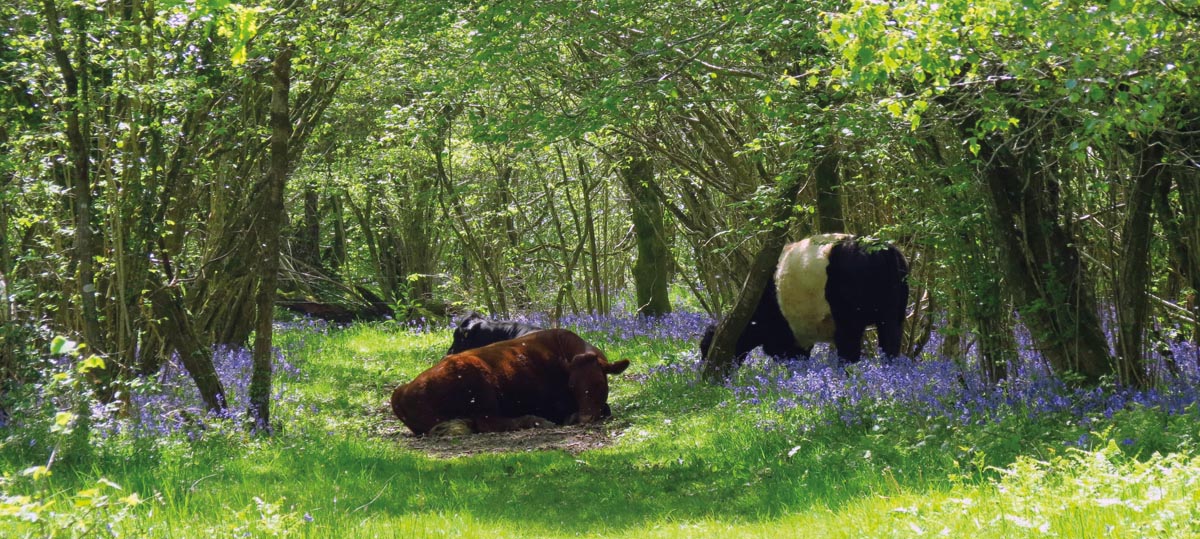
Returning to the bridleway, continue south through hazel coppice to a bridle gate and up the hill. As you emerge from the woodland, the views open up. You are reaching the highest point of the reserve here, and amongst the bluebells and bracken, there is a tumulus to the right, an ancient burial ground. Just off the path to the right is a good spot for a picnic or just to take in sweeping views of Eggardon Hill, Golden Cap, the sea and across the Marshwood Vale to Lewesdon Hill, the highest point in Dorset, and beyond.
Return to the bridleway and continue past the bridleway junction for about 300m down the hill, curving round to the right until you reach a wider grassy track. Stay on the track as it continues to curve right, ignoring the bridleway signs and heading straight down through the woodland. Now heading north, this track eventually joins the main forestry track at a large triangular-shaped open area. Turn right up the hill at this point.
After 150m you will see a metal trough on the left, just after a Scots pine and a waymarked post (orange arrow), at a crossroads of track and paths. Take the first left immediately after the waymarked post, heading downhill in a westerly direction. On the left is an area of recently coppiced woodland, originally fenced for deer protection. The track snakes down the hill, passing remnants of the forestry plantation conifers and interesting old oaks, narrowing until eventually reaching a wooden field gate. Pass through, turn right, and you are now on the disused Bridport to Maiden Newton railway line. Continue along the track as it cuts through woodland, a good spot to hear or see marsh tit or spotted flycatcher. You eventually arrive at another wooden gate, just before which you will see a restored ganger’s hut on your left, now an established bat roost.
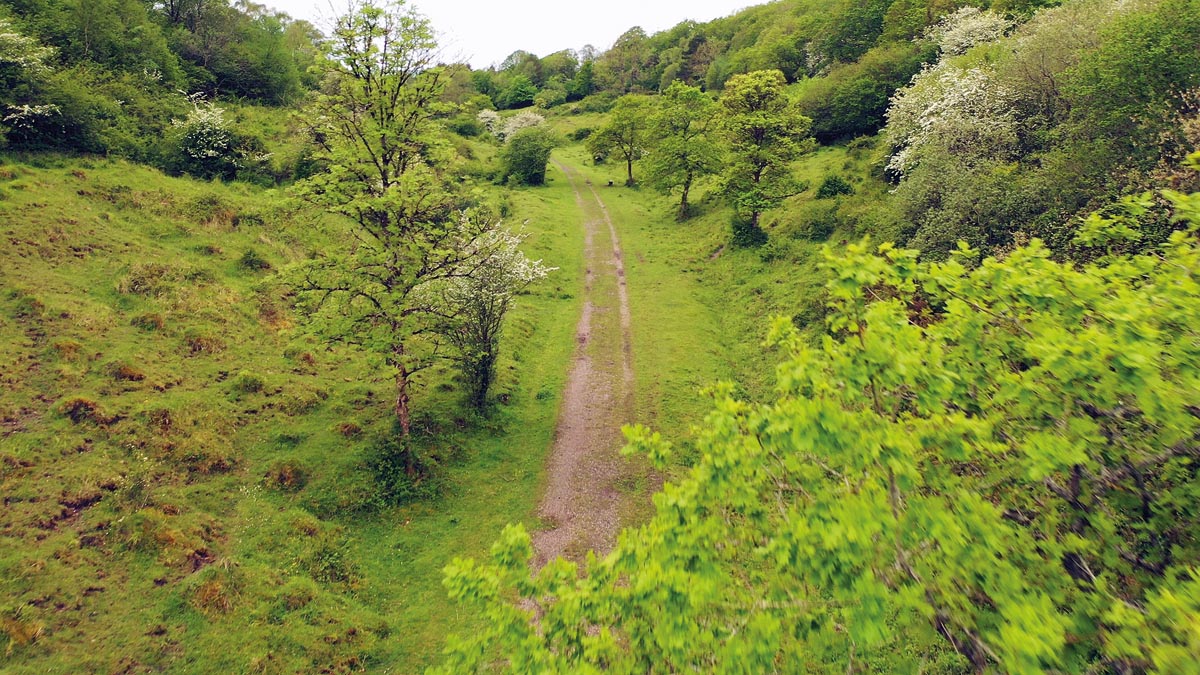
After going through the gate, the railway cutting opens out, and in late spring and early summer, the ground is awash with interesting flora, from lesser celandines and primroses, to cowslips, orchids and many more besides. Along this stretch are a couple of wooden benches, an ideal opportunity to take in the sights and sounds of nature. After 500m or so, the track rejoins the bridleway, and takes you back to the car park where you started.
Powerstock Common
Find out more about visiting Powerstock Common on our website.
Explore
Powerstock Common Wildlife Walk
News
The Beauty of Weeds
Young Conservationists
Species of the Month
Hogchester and the Harvester
Our Community
Rewilding the Skies over Wild Woodbury
Taking Action for Dorset’s Rivers and Wetlands
A Haven for Wildlife at Sculpture by The Lakes
Learn the Wild Way at Kingcombe
For the Love of Wildlife
Taking a Closer Look at Micro-moths
Celebrate and Commemorate
Remembering Someone Special with a Gift for Wildlife