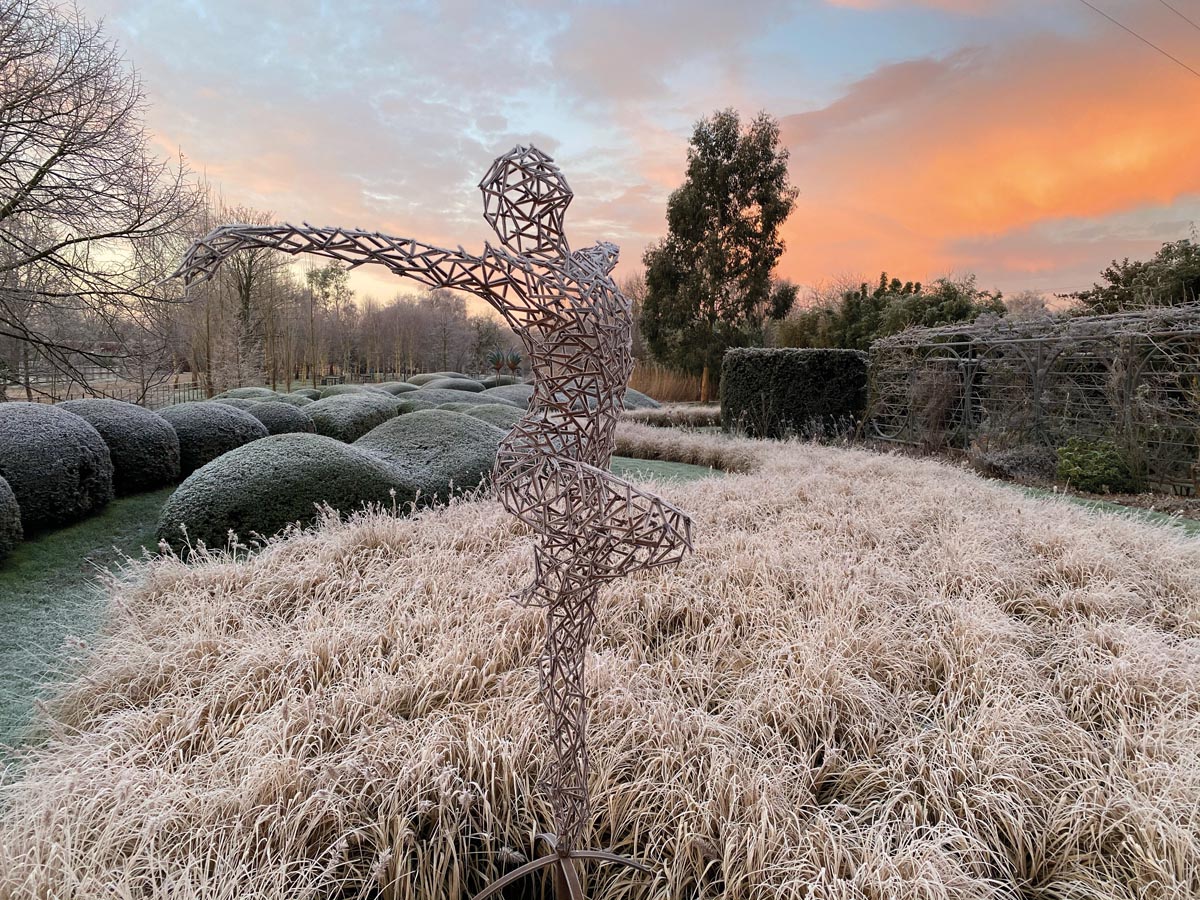
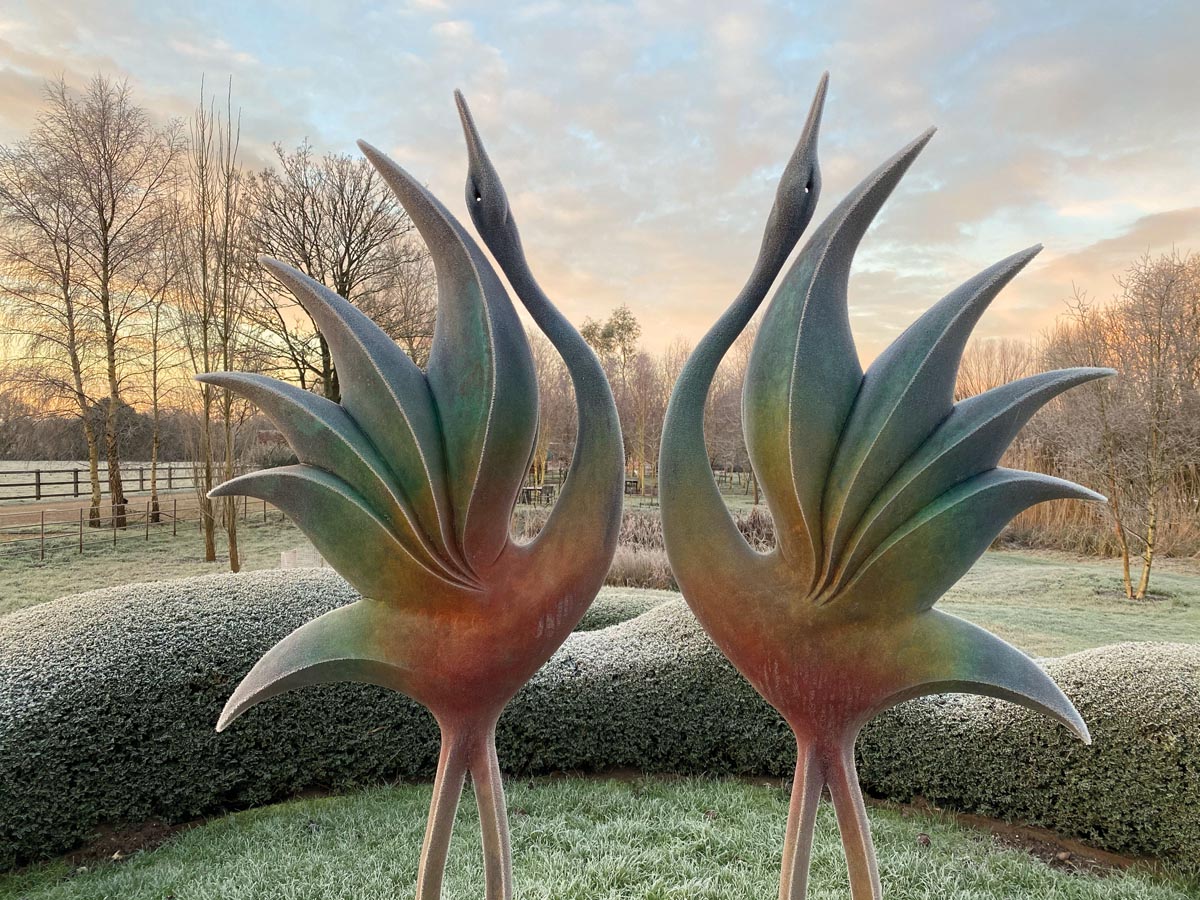
Sculpture by the Lakes is a 26-acre tranquil haven set in the heart of the Dorset countryside. It was created by Monique and Simon Gudgeon some 12 years ago at Pallington Lakes, east of Dorchester. Today, this former fishery provides the stunning setting for over 130 sculptures which are complemented by a careful mix of formal gardens and natural areas where wildlife flourishes.Since 2020, Dorset Wildlife Trust has been working in partnership with Sculpture by the Lakes to record the site’s abundant wildlife. Some of the highlights from these surveys are described by Conservation Officer, Hamish Murray.
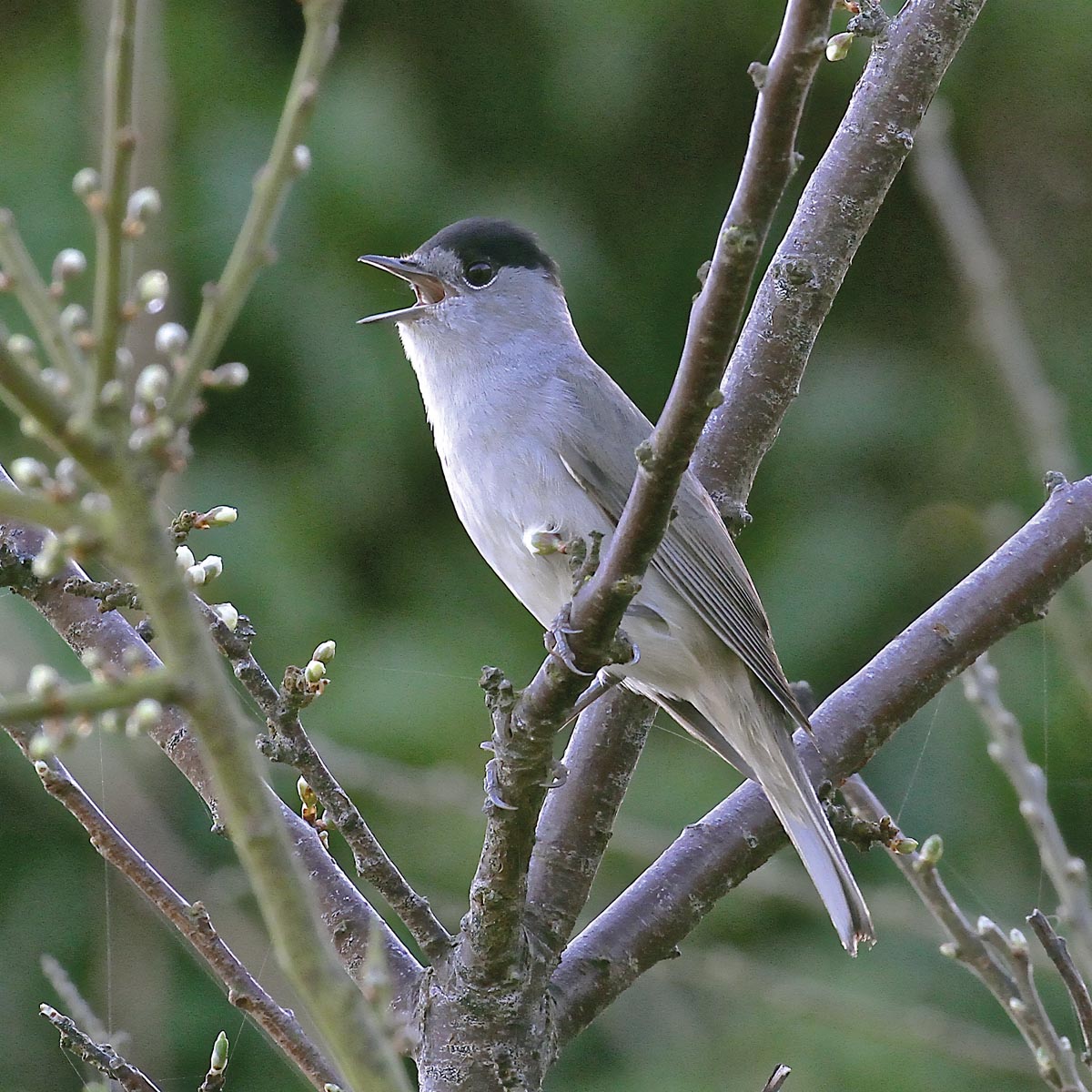
Over 100 species of bird have been recorded at Sculpture by the Lakes. A variety of waterbirds make use of the lakes and ponds with the elaborate courtship displays of great crested grebes providing a particular highlight early in the year. Kingfishers are a common sight as they patrol up and down the riverbank and a visit in the spring will be rewarded by a wonderful chorus of birdsong. In the wetter areas Cetti’s, reed and sedge warblers chatter incessantly while in the woods there is an opportunity to compare the beautiful songs of blackcap and garden warbler. With luck, a sickle-winged hobby might be glimpsed as it hunts dragonflies over the water. After the visitors have left for the day, barn owls are often seen, quartering over the local meadows in search of small mammals.
In recent years, otters have become regular visitors to the site. Although these fascinating mammals are rarely seen, their ‘spraints’ act as a very effective calling card. This watery world is also ideal for grass snakes which use the warmth from the garden’s large compost bins to help incubate their eggs.
The wide range of habitats from wetland to woodland supports a wonderful diversity of insects. The most conspicuous of these are the many different types of dragonfly. Weekly counts of these colourful insects have recorded 20 species, and these include many notable species such as the scarce chaser, red-eyed damselfly, hairy dragonfly, and downy emerald. This wealth of dragonflies is a major reason Sculpture by the Lakes has recently been recognised as a Site of Nature Conservation Interest.
The site’s wildflower list totals over 200 species and these have been augmented by some specially created meadow areas where knapweeds, scabious, bedstraws, wild carrot, and ox-eye daisies thrive, making a colourful display and acting as a magnet for pollinators.
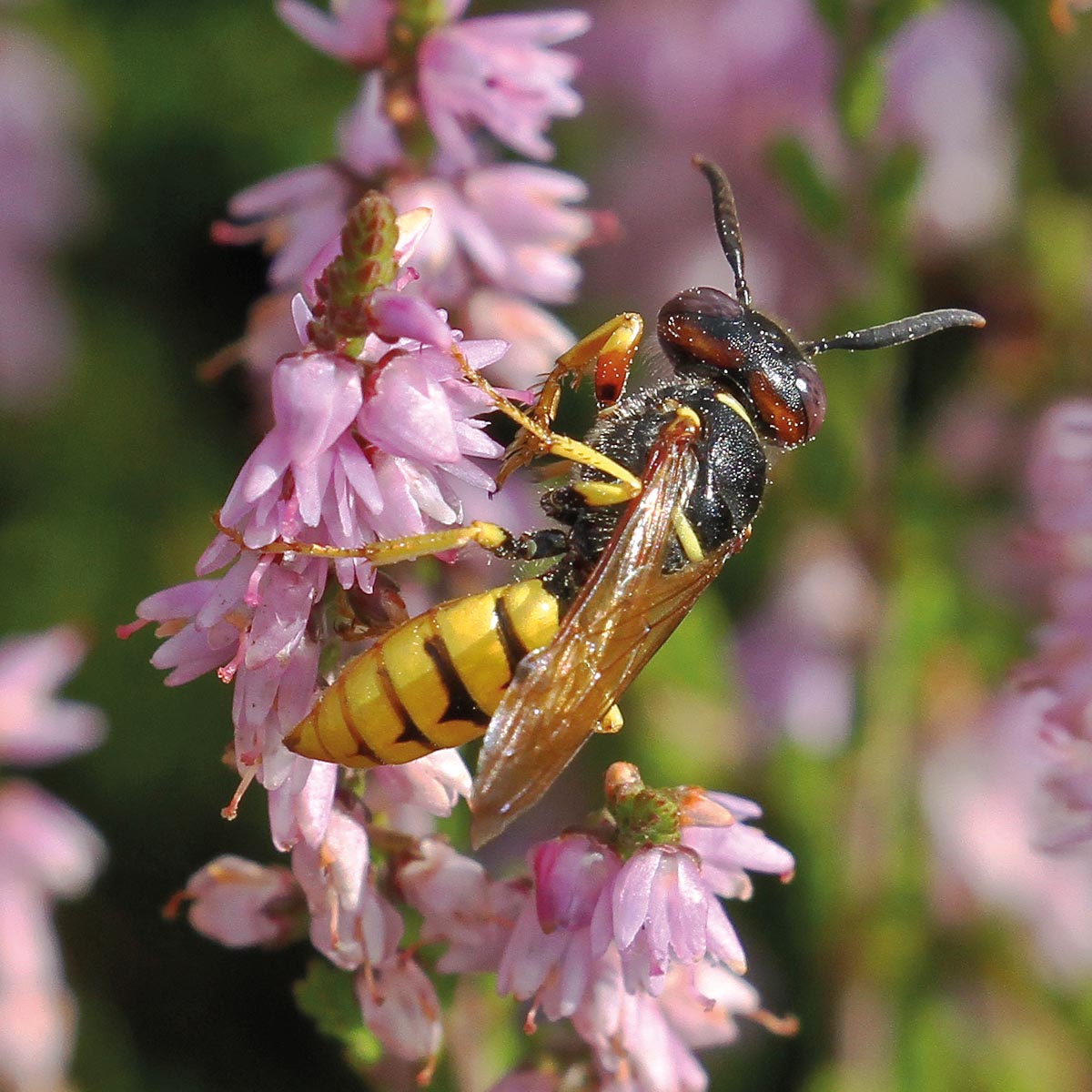
The Nationally Scarce yellow loosestrife bee thrives in the wetter areas where its eponymous foodplant grows. The carrot mining bee is another rare species which can be seen on warm summer days. A long list of parasitic nomad bees includes the familiar Gooden’s nomad bee and the much rarer Lathbury’s nomad bee. Over a hundred different wasps have been noted ranging from the fearsome beewolf to the spiny mason wasp.
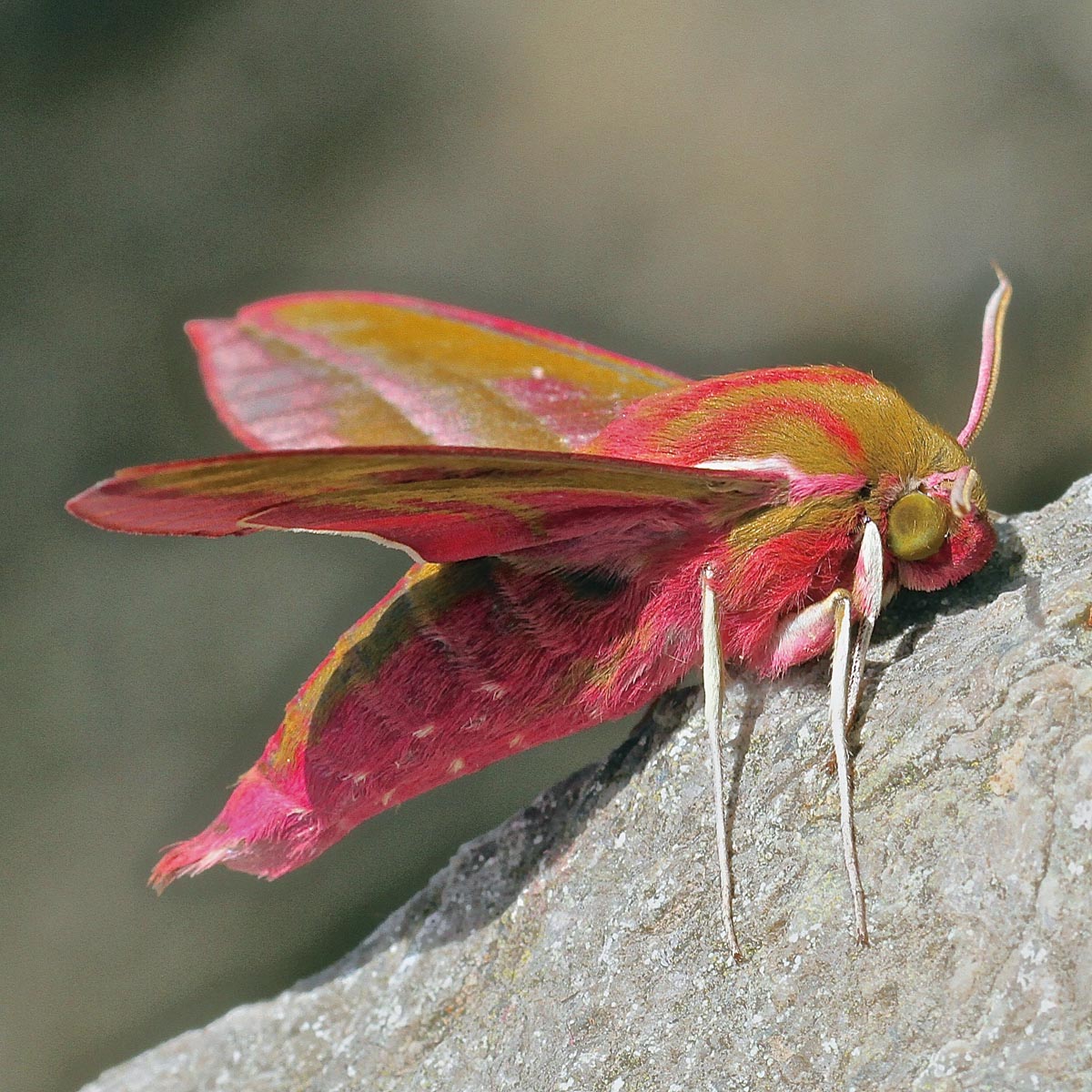
Regular moth-trapping has produced an impressive list of species. The nine types of hawk-moth are probably the most spectacular, while the migrant beautiful marbled is the rarest moth so far recorded. Not all moths are nocturnal and many colourful day-flying species like six-spot burnet, Jersey tiger and red-tipped clearwing have been noted. A walk round the lakes on a warm summer’s day will produce plenty of common blues, small coppers, meadow browns and many other butterflies.
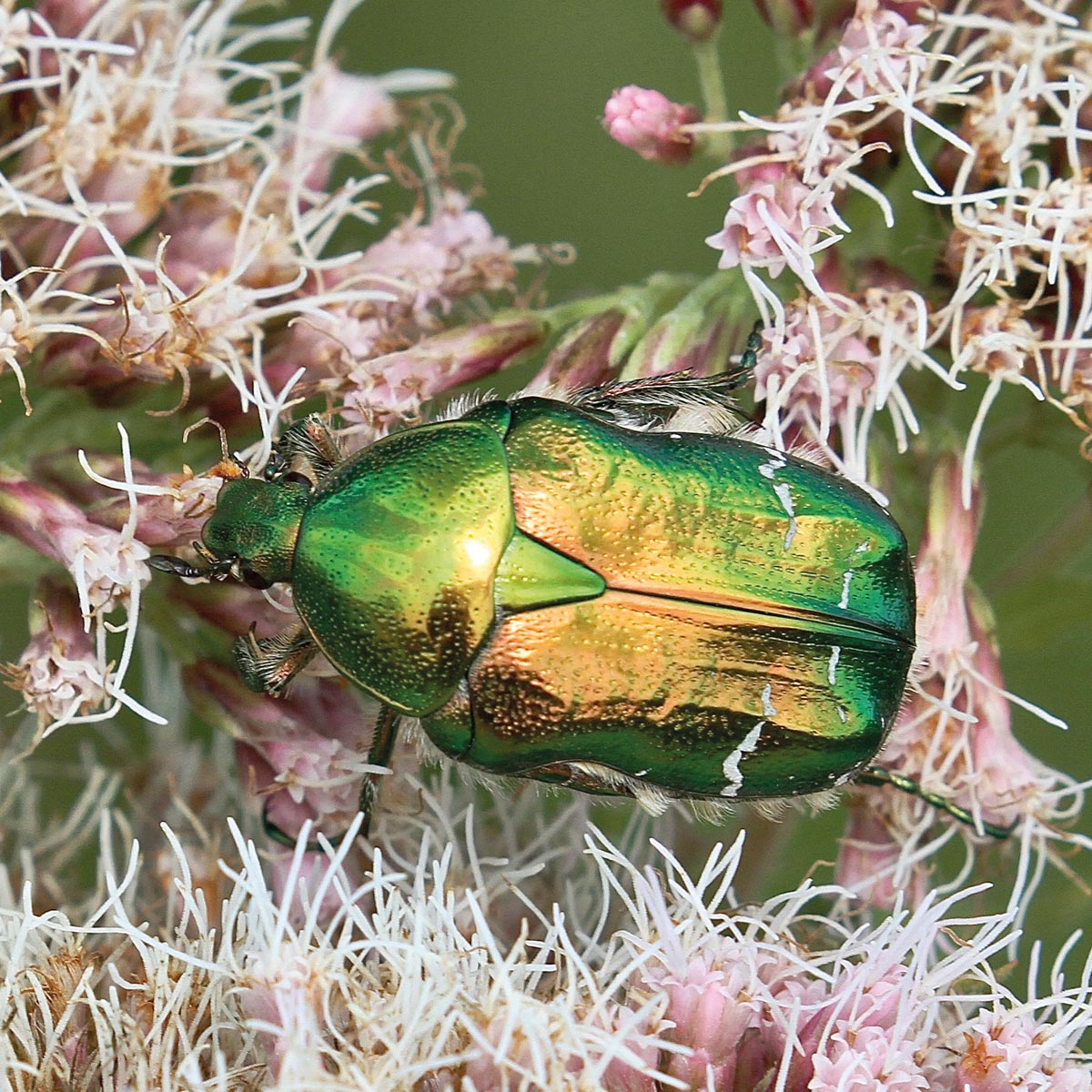
Much less conspicuous are the 120 or so species of true bug which make their home here. Among the many beetles seen on the site, the dozen or so ‘longhorns’ are noteworthy and include the impressive musk beetle and attractive wasp beetle. Umbellifers like hogweed and wild angelica attract rose chafers and thick-kneed flower beetles while various tortoise beetles can be found on fleabane and water mint. The site boasts 300 species of true fly, featuring 50 hoverflies, and diverse soldierflies, robberflies, and snipeflies. Common spring sights include dark-edged and dotted bee-flies, with the rare downland villa discovered in 2023.
Monique and Simon, with their dedicated team, have created a celebration of art and nature which is now an officially-recognised Botanic Garden – the only sculpture park in the world to achieve such accreditation.
Visit Sculpture by the Lakes
If you are interested in seeing more of the wildlife at Sculpture by the Lakes, why not join one of the fortnightly Wild Wednesday events led by a local expert, Rebecca Porter, from May to August – visit the website for further details and costs.
After your wildlife safari, there are plenty of other attractions to enjoy with an on-site Gallery, the Store selling artisan gifts, and the Pantry and Kitchen offering a variety of quality food and drink.
There is certainly something for everyone at Sculpture by the Lakes and it is well worth a visit. It is open every month of the year – please visit www.sculpturebythelakes.co.uk for details of opening times, prices and booking arrangements.
Explore
News
Our Community
Young Conservationists
Species of the Month
Hogchester and the Harvester
The Beauty of Weeds
Rewilding the Skies over Wild Woodbury
Taking Action for Dorset’s Rivers and Wetlands
A Haven for Wildlife at Sculpture by The Lakes
Learn the Wild Way at Kingcombe
For the Love of Wildlife
Powerstock Common Wildlife Walk
Taking a Closer Look at Micro-moths
Celebrate and Commemorate
Remembering Someone Special with a Gift for Wildlife