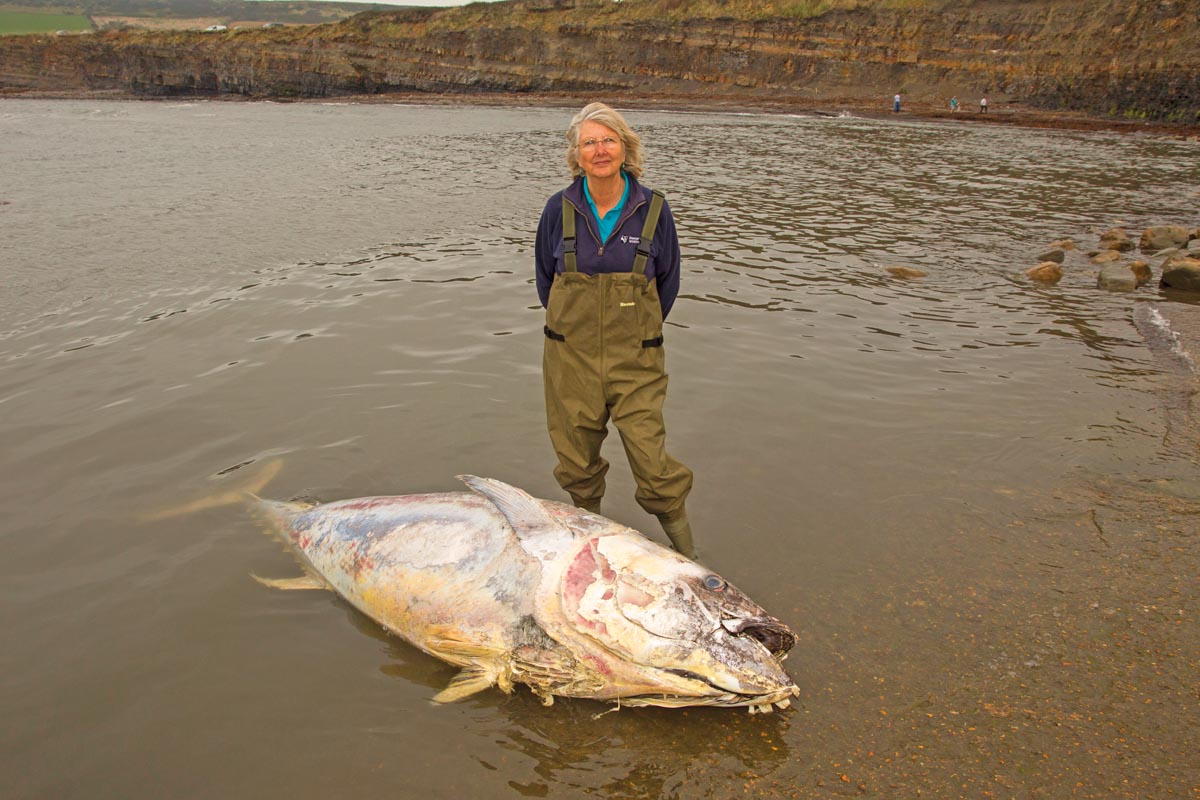
Blue fin tuna, one of the world’s largest and fastest fish, is making a come-back in Dorset’s seas. Once a common sight, these top predators have been absent from our waters since the 1960s, but in 2023 there were sightings of them at Portland Bill, Old Harry Rocks, Bournemouth and even inside Poole Harbour entrance. Although sadly one washed ashore at Kimmeridge dead, it offered a rare opportunity for a close-up look at this magnificent fish. The impressive specimen measured 9ft in length, about as large as they get.
These animals provide a wildlife spectacle when they gather, sometimes alongside dolphins and seabirds, to feast on shoals of smaller fish such as herring and mackerel. It is believed their disappearance may have been linked to the collapse of herring shoals in the 1960s. The recovery of these prey fish may be the reason for the tuna’s return to UK waters, although there is some concern that current levels of fishing may cause another collapse. While in the past, blue fin has been the target of both commercial and recreational fishers, there is currently a strict prohibition on landing them unless licensed as part of a trial commercial fishery or an anglers’ catch and release programme, both administered by the Marine Management Organisation.
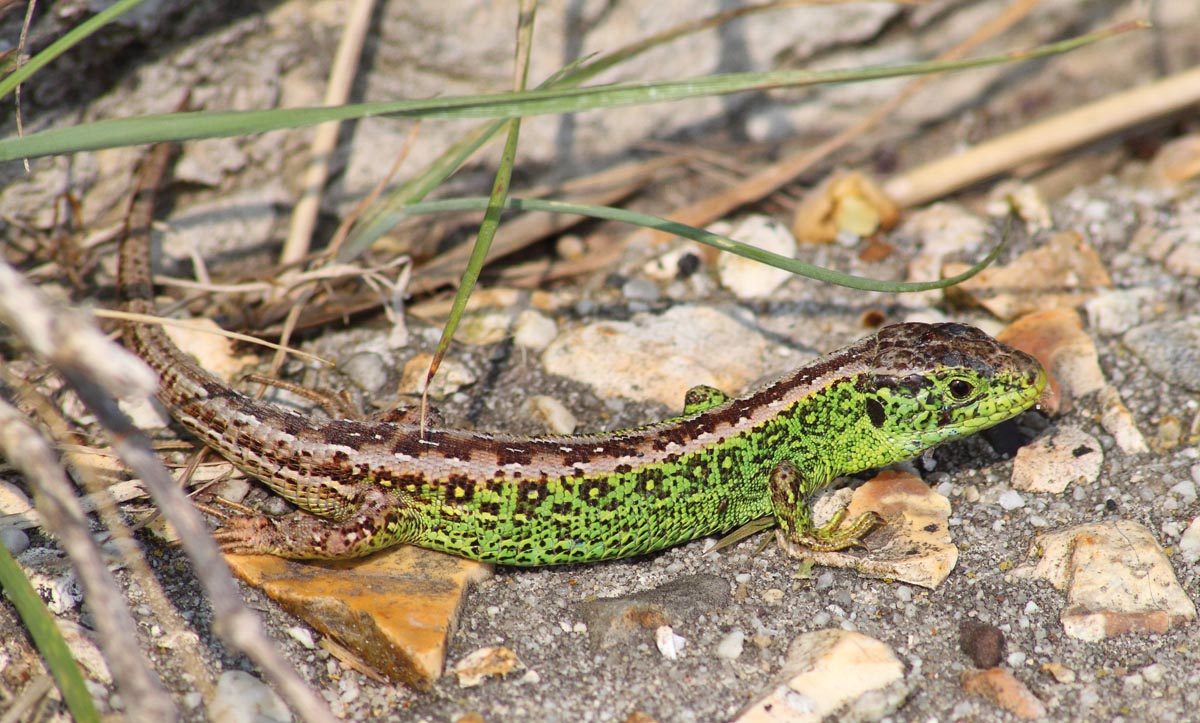
Juvenile sand lizards bred in captivity have been released onto Winfrith Heath to attempt to restore the population of this rare species to a self-sustaining level. Initially, 23 juveniles were released on the lowland heathland, but two further releases of up to 150 sand lizards are planned to enable a thriving population to establish.
Sand lizards are one of the species to benefit from the Species Recovery Programme Grant from Natural England to fund the recovery of rare species and habitats across Dorset. Dorset Wildlife Trust, Natural England, Amphibian & Reptile Conservation (ARC) and their captive breeding partners have teamed up to reintroduce the sand lizard to Winfrith Heath.
Work has been undertaken on the heath to create and manage the bare ground habitat which is essential for successful egg development and the reintroduction of the sand lizards. The juveniles have been bred at captive breeding centres managed by Marwell Wildlife, Dorset Council and Forestry England. These centres have outdoor enclosures that mimic the sand lizard’s natural environment.
Full steam ahead for peat restoration on Dorset’s heaths
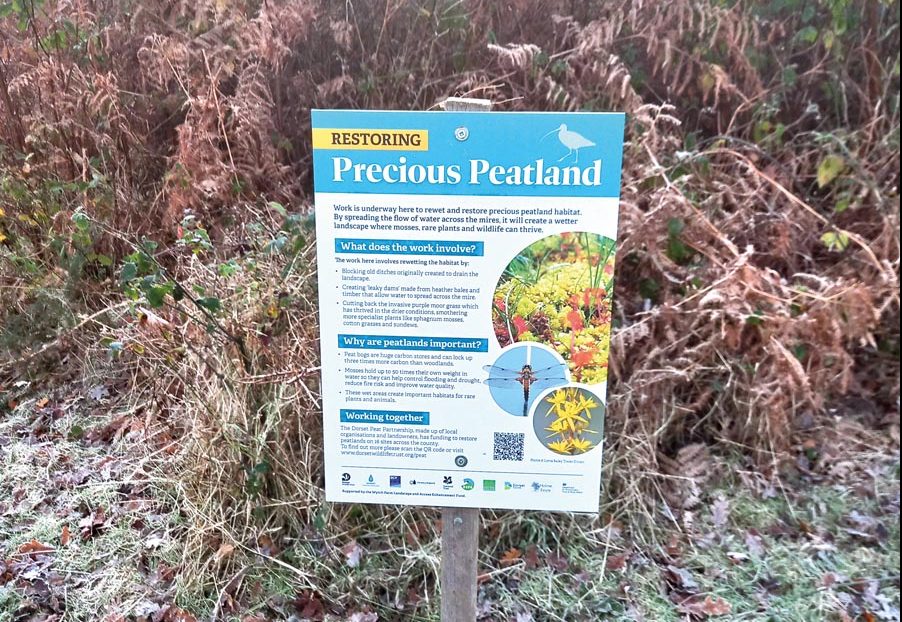
Having successfully secured £750,000 of restoration grant funding from the Nature for Climate Peatland Grant Scheme, Dorset Peat Partnership has started work on restoring 172 hectares of degraded peat habitat across 16 heathland sites in Dorset.
Over the winter months, work has taken place on our phased restoration sites to remove trees, dense scrub and gorse which do not support peat-forming habitats because they remove water and carbon. One of our partners, Forestry England, has started work at Whitesheet, adjacent to Holt Heath using specialized tools to work their way through solid gorse to make the ground surface visible. Later in the summer, the drainage channels will be blocked and the purple moor-grass reduced to increase the site’s ability to store water and become peat-forming habitat again.
All sixteen peat restoration sites will be undertaking similar works this year to restore their hydrological function using peat and timber dams, woody debris, and heather bales to both slow the flow and spread water across our wetland habitats.
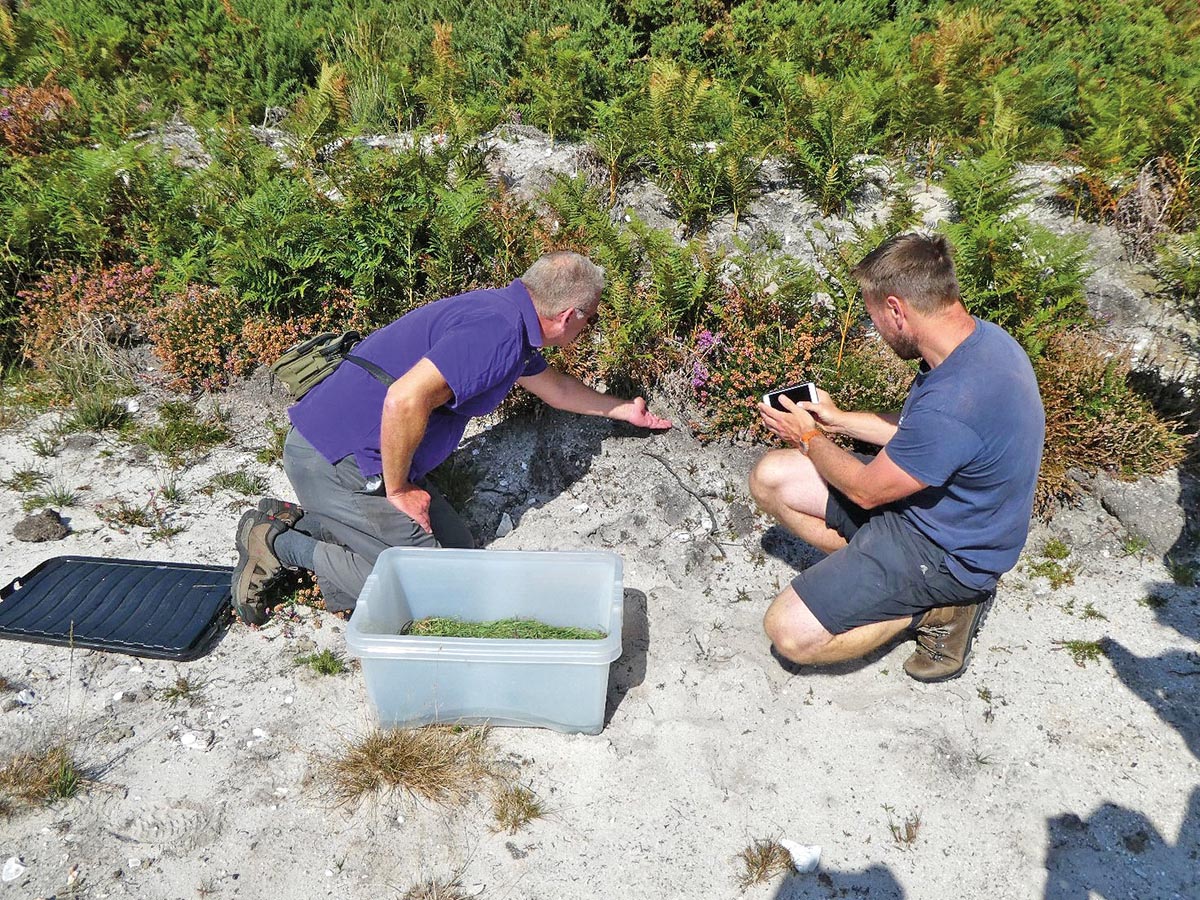
Monitoring change at all sites is vital. Having captured baseline data during our initial Discovery Grant phase, we established 25 dipwell monitoring sites to record ground water level changes, 30 vegetation monitoring points, and are using fixed point photography to record site conditions before works start.
Dorset Peat Partnership
Can you volunteer to help monitor the peat restoration?
The Dorset Wildlife Trust Photography Competition is back!
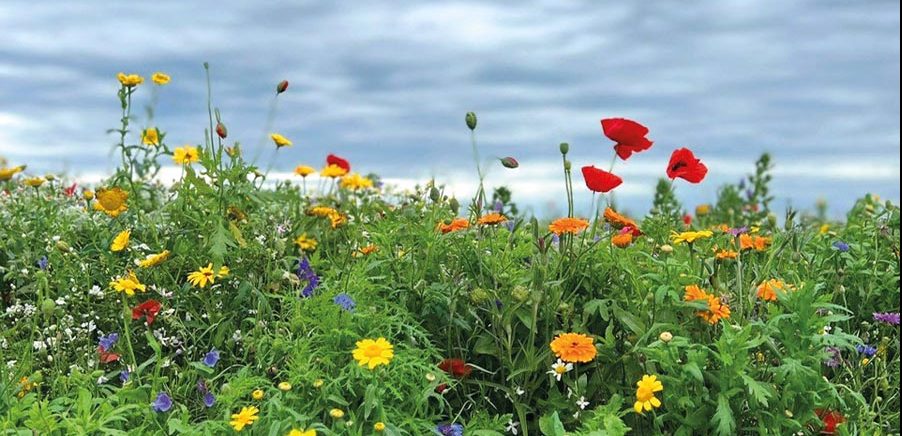
Last year, we launched the hugely successful 2023 Dorset Wildlife Trust Photography Competition and we received a plethora of wonderful wildlife snaps. Now, we want to make sure that you, our members, are first to know about the launch of our 2024 photography competition!
The competition, which encourages our supporters to engage with Dorset’s wildlife and wild places, will launch on 3 May and run for two months, giving you plenty of time to get out and take your most inspiring photos to submit for a chance to win some fantastic prizes and feature in our various fundraising and marketing communications. This year’s star prize is a one-night stay at the stunning Alexandra Hotel and Restaurant, situated in Lyme Regis.
Full competition details including categories, judging panels and the remaining prizes will be announced on the launch date. So, scout out your best wildlife watching spots and get ready for the 2024 Dorset Wildlife Trust Photography Competition!
Photo Competition
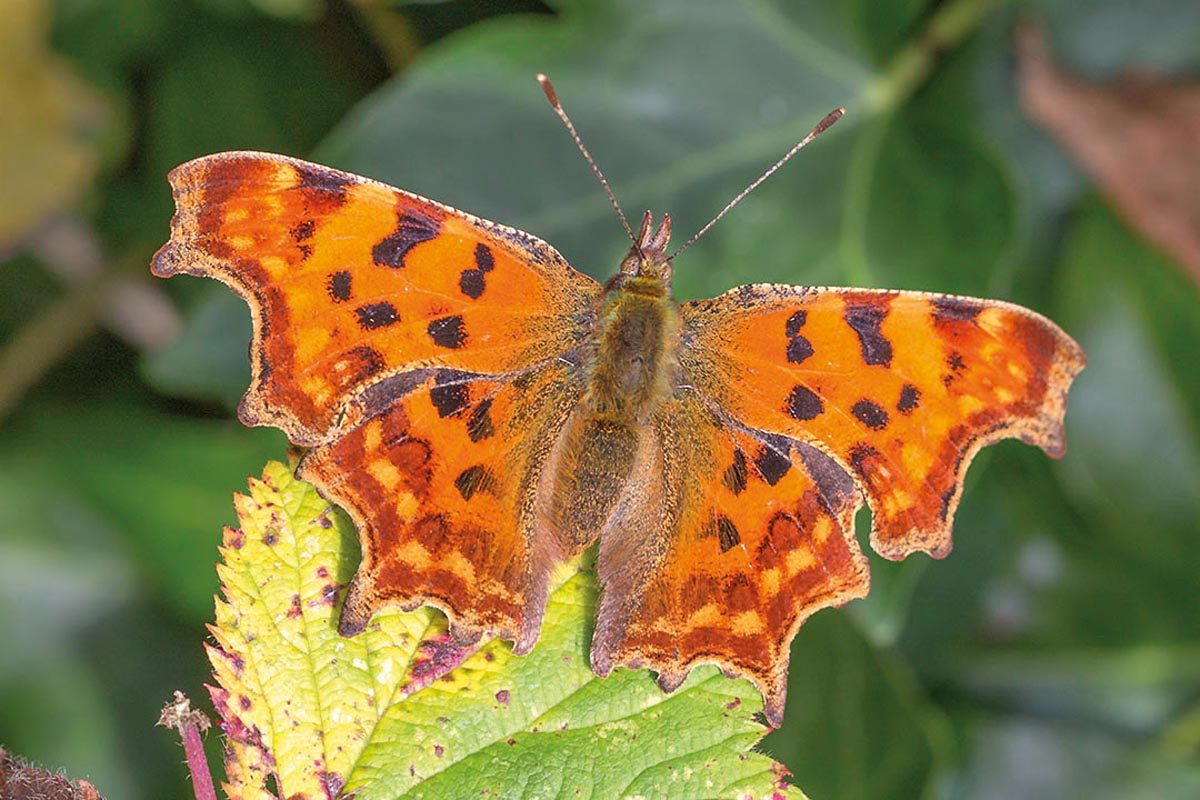
Check out the winning photos from the 2023 Photo Competition
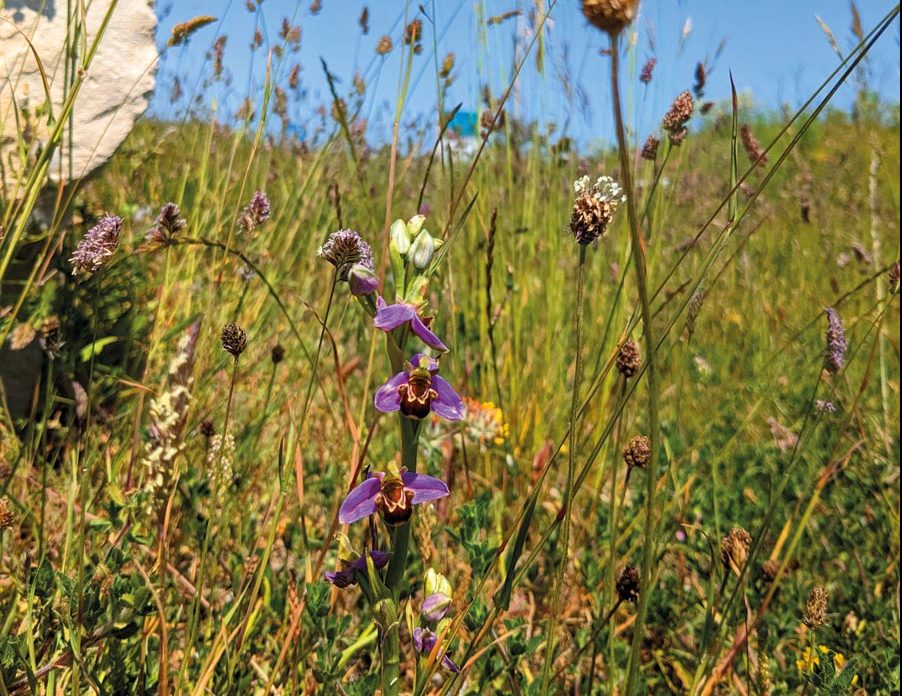
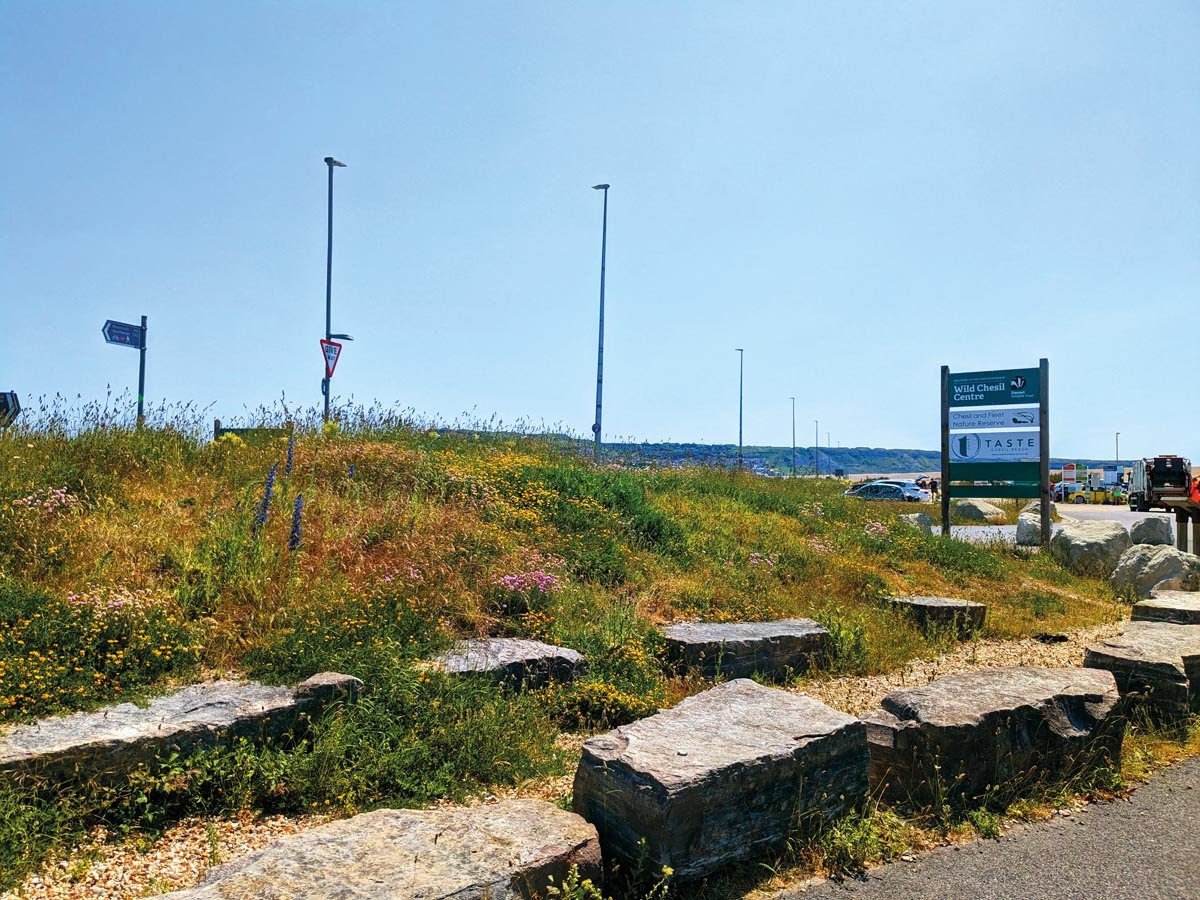
Wild orchids are flourishing at the Fine Foundation Wild Chesil Centre. The first bee orchid was spotted in 2018 and last year, the team counted over 50 bee orchids and a good number of pyramidal orchids on the bund opposite the centre and around the edge of the car park. The bund was originally seeded in 2012 when the centre was built, and it is great to see these species increasing in number.
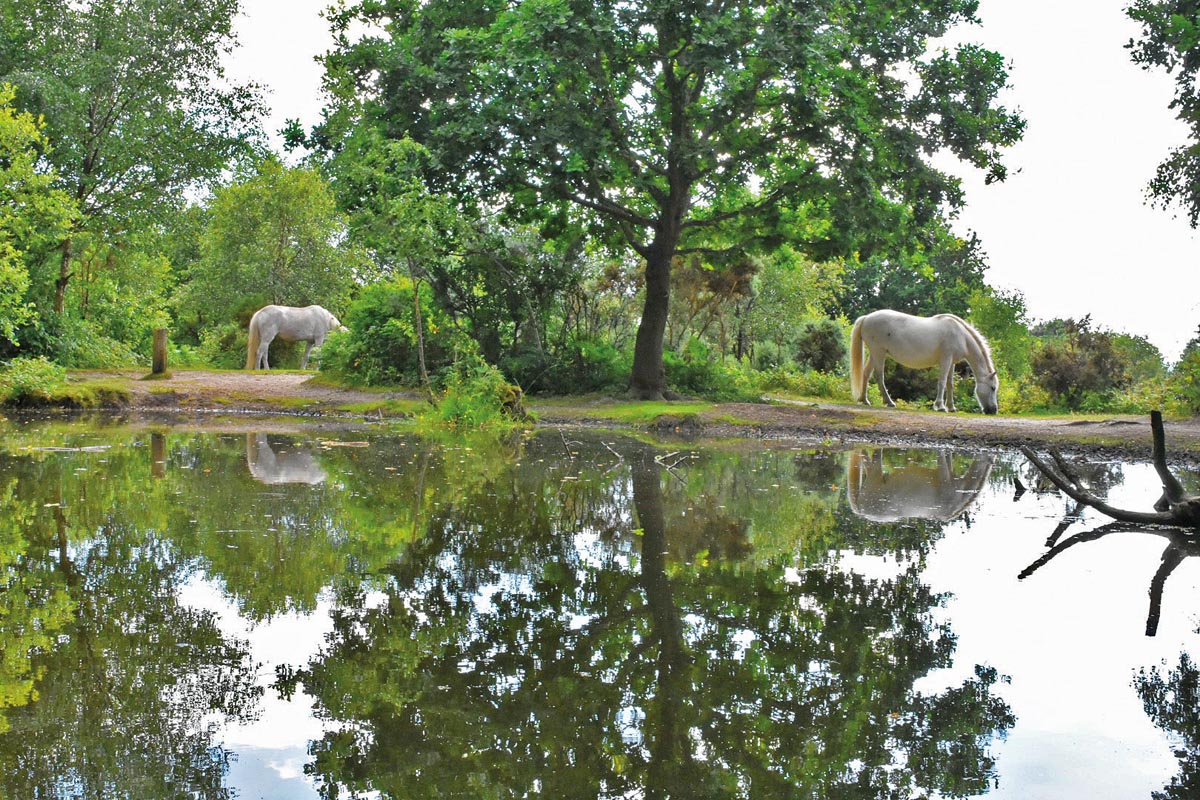
A new Local Nature Recovery Strategy is being created in Dorset to identify the best opportunities to restore, grow and connect nature across the county. The process is being led by Dorset Council and supported by BCP Council and Natural England, together with partners including Dorset Wildlife Trust and Dorset Local Nature Partnership. The strategy will be one of 48 which collectively will form a national Nature Recovery Network for England to benefit both nature and people. As part of the process, a local habitat map will be produced with a set of biodiversity priorities and proposed actions such as creation of wetlands or more sustainable management of woodlands and grasslands. Landscape scale activities will be connected with smaller scale initiatives.
At the 2023 AGM, we thanked retiring trustees and welcomed new ones. Professor Nigel Webb is retiring after loyal service of more than 40 years, during which he was chair of trustees, and has overseen our development from a relatively small county naturalists’ association to a fully functioning wildlife trust. Kelvyn Derrick is stepping down, following 11 years as a trustee and much appreciated leadership on commercial and investment matters. Our new trustees are Ian Alexander, Leo Henley-Lock and Lisbet Sherlock. Ian is a senior officer at Natural England and a widely recognised champion of the natural world. Leo leads the National Trust’s countryside teams for North & West Dorset and is a former employee. Lisbet moved to West Dorset after retiring as Head of Executive Communications (Europe, Africa, and the Middle East) at CISCO, and was a trustee of the Chiltern Society.
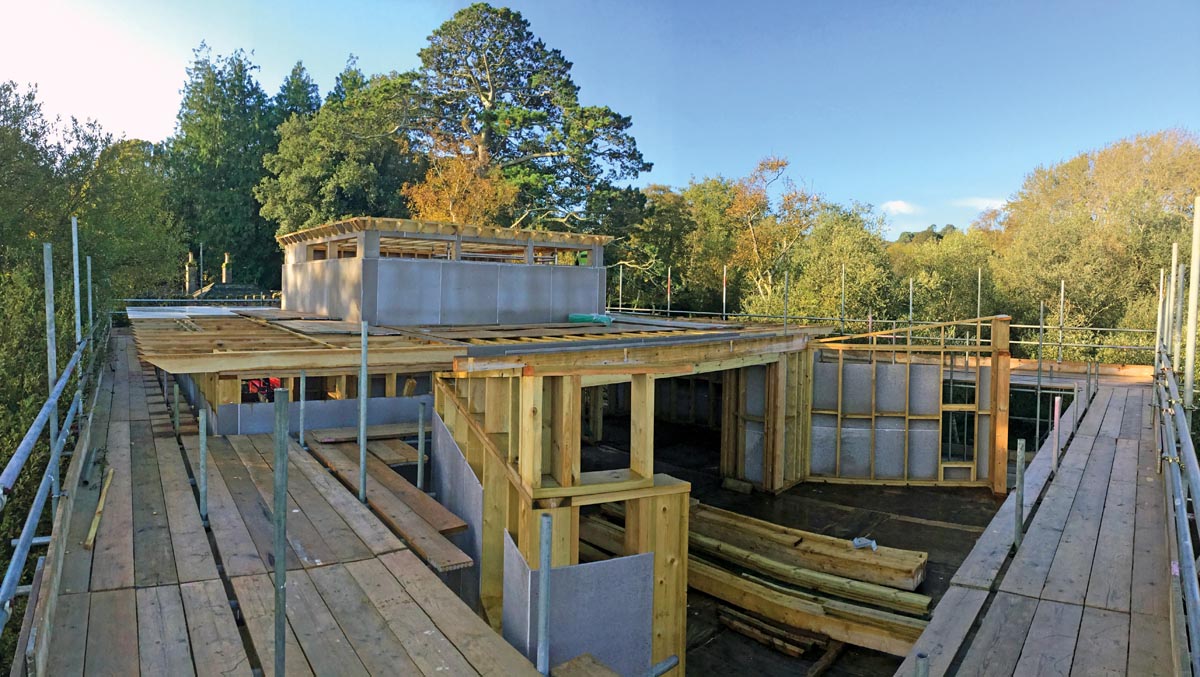
Considerable progress has been made on The Lookout on Brownsea and it is exciting to see the results of years of planning finally taking shape. The new wildlife observatory will provide a stunning panoramic view across the lagoon and its wildlife. It will also introduce visitors to the mosaic of habitats and species found on the island and inspire them to explore and enjoy the different nature experiences Brownsea has to offer. When The Lookout opens, Dorset Wildlife Trust and National Trust volunteers will be on hand to talk to visitors about the wildlife they can see and discover on the island.
The construction process has not been without its challenges, which inevitably come from building such a unique structure on a small island, but everyone has been working hard to bring this exciting project to life and The Lookout is set to open to the public in 2024.
The Lookout is part of our Wild Brownsea project developed in partnership with National Trust. It is part funded by the National Heritage Lottery Fund with contributions from National Trust, The Fine Foundation, as well as Dorset Wildlife Trust members and supporters.
Natural England fund ambitious Species Recovery Programme
In November 2023, Dorset Wildlife Trust was awarded a share of a £14.5 million grant by Natural England as part of the government commitment to reduce species at risk of extinction in the UK. The grant will help recover some of Dorset’s most rare and threatened species.
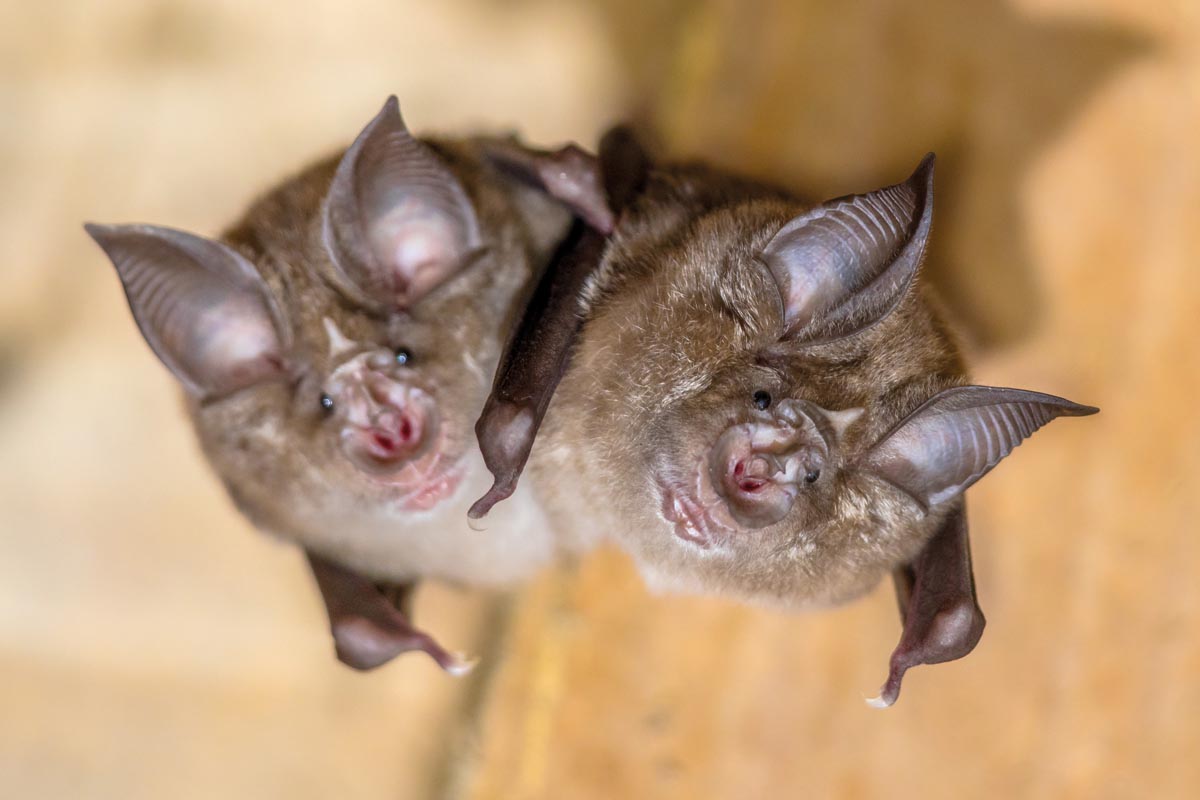
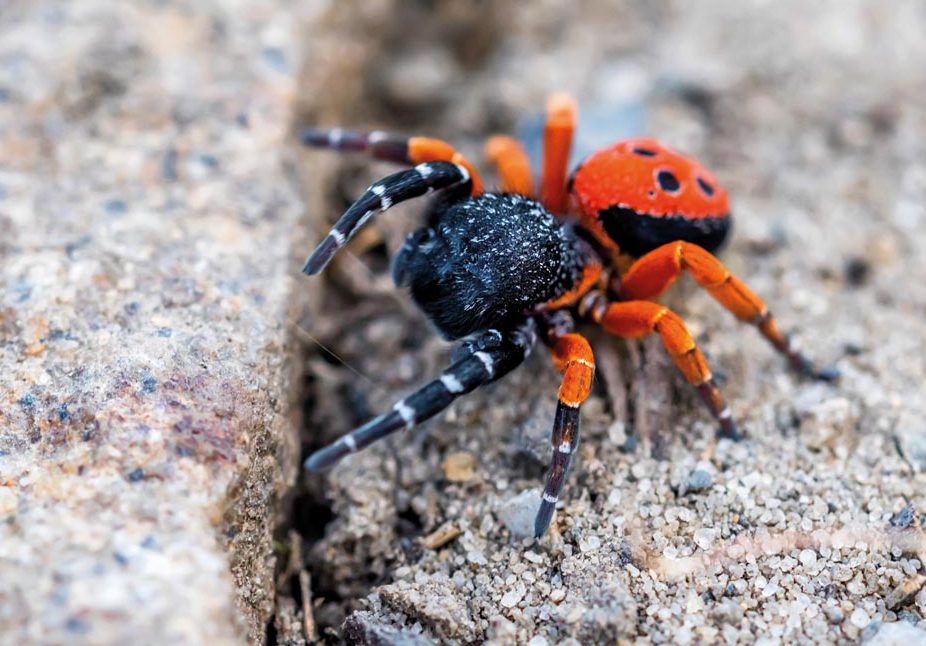
A series of practical interventions will create and improve the habitat for a set of 10 specially selected ‘Priority Species’ across 11 nature reserves. These ‘Priority Species’ are threatened, or near threatened and urgent action is needed if they are to survive: pillwort, marsh clubmoss, sand lizard, heath tiger beetle, lapwing, dingy mocha, great crested newt, ladybird spider, fly orchid and greater horseshoe bat.
At Upton, Higher Hyde and Tadnoll & Winfrith Heaths, the project will involve creating dry heathland scrapes to enable the sand lizard to lay its eggs on bare sand and wet scrapes for pillwort to establish itself as well as the re-introduction of the ladybird spider. Over in west Dorset, ponds will be created and restored at Kingcombe and Powerstock Common to benefit the great crested newt and in the north of Dorset, woodland management will aim to provide more habitat for the fly orchid.
Explore
News
Our Community
Young Conservationists
Species of the Month
Hogchester and the Harvester
The Beauty of Weeds
Rewilding the Skies over Wild Woodbury
Taking Action for Dorset’s Rivers and Wetlands
A Haven for Wildlife at Sculpture by The Lakes
Learn the Wild Way at Kingcombe
For the Love of Wildlife
Powerstock Common Wildlife Walk
Taking a Closer Look at Micro-moths
Celebrate and Commemorate
Remembering Someone Special with a Gift for Wildlife